







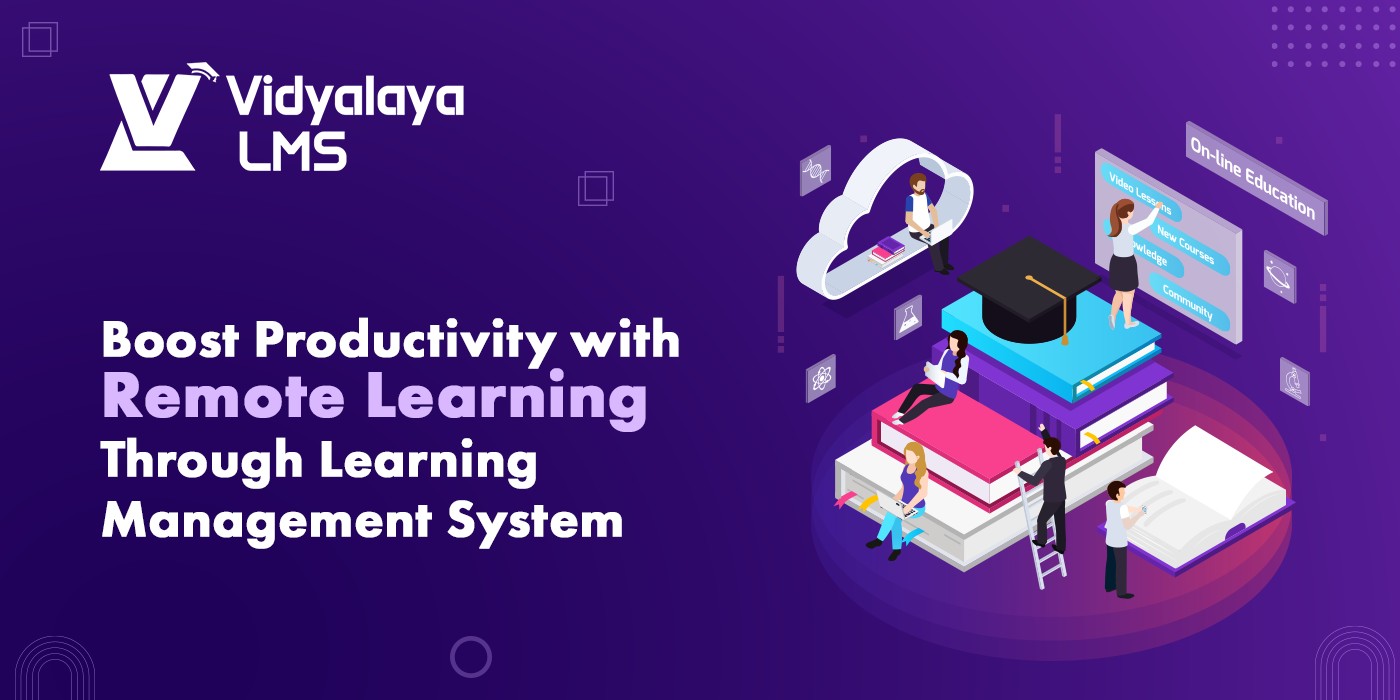
Organizations and educational institutions increasingly depend on remote learning and e-learning to support a geographically distributed workforce and student base. As teams and learners operate from multiple locations, traditional methods of measuring productivity and training effectiveness have evolved. However, simply shifting existing training programs to an online format does not automatically lead to improved performance or engagement. Productivity gains are achieved only when remote learning is delivered through a well-structured, goal-oriented Learning Management System (LMS) designed to support efficient skill development and measurable outcomes.
A Learning Management Software serves as a centralized platform for delivering, managing, and tracking online educational programs in a consistent, scalable, and data-driven manner. By organizing learning content, automating assessments, and providing actionable insights into learner progress, an LMS enables institutions and businesses to directly enhance performance, improve learning efficiency, and maximize the overall return on their training investments.
Need for Structure in Remote Learning:
A significant challenge with virtual learning is the lack of a clear framework to provide students with guidelines to follow for a specific period. Without tools to track results, most people struggle to maintain consistent concentration throughout their education. The LMS has been developed to solve this issue by providing a single point for both students and instructors to find the same information in the form of an LMS.
When a student logs into an LMS for the first time, he/she sees in which order the materials should be used, what deadlines apply for each course, and the means through which each student will be evaluated. This allows students to develop greater self-control and ultimately reduces the potential for interruptions to occur during the process of learning. As a result of this approach to virtual learning, both corporations and educational institutions use LMS as one of the primary means of increasing productivity.
How a Learning Management System Improves Productivity?
Having all your corporate training materials in one central location allows for both increased efficiency in the way educational content is delivered and improved ways to manage the delivery of educational content. As a result, corporate trainers and educators can provide easier access to a centralized catalog of organized learning resources.
Educational institutions provide many of the same benefits mentioned above for LMS software, including these three benefits:
- Centralized Content for Easy Access/Management
- Automated Test/Assessment Process
- Real-time Tracking and Reporting of Students’ Progress
- Flexibility in Terms of How Content is Delivered
By reducing the amount of time spent performing administrative tasks, LMS solutions enable educational organizations to be more efficient with their resources and create an improved educational experience.
LMS for Remote Employee Training:
Many businesses consider remote employee training to be one of their top strategic objectives, and Learning Management Systems (LMS) provide a viable solution for companies as they implement their onboarding and skills training programs. By utilising an LMS, a company can train employees remotely by delivering courses such as onboarding, skills development, and compliance training without regard to where the employee is located.
When training remote employees, using an LMS provides an opportunity for the employee to learn at his or her own pace and provides a means for a manager to monitor the employee’s progress through analytics and reports. This enables a company to identify skill gaps as early as possible and to target training to resolve those gaps, and ensures that all employees have access to the same learning standards regardless of their geographical location. These benefits lead to improved employee performance, increased productivity, and improved business results overall.
Supporting E-Learning for Remote Students:
Educators and other education providers have begun using LMS System platforms to give remote students access to limited e-learning and classroom participation through distance learning methods. Educational institutions that utilize a Learning Management Platform can develop a virtual classroom for each student, record lectures or presentations in a digital format, provide an area to upload and submit assignments, and administer the online examination process.
Students can access educational materials anytime, anywhere, using a Learning Management Platform. Likewise, educators can assess student academic performance and issue evaluations through this type of platform. The combination of independent learning opportunities for students and the ability for educators to supervise them enables higher education institutions to deliver a full range of educational experiences, without reducing the level of academic excellence. Online Completion Degree Programs are viable, sustainable means of providing postsecondary education.
Role of Online Education Platforms in Modern Learning:
LMS Software provides the tools to create interactive, engaged, personalized, and efficient online learning experiences through its use of assessments, multimedia, and real-time performance feedback. The ability to have all these features combined allows for increased student engagement and continuous development of the learner.
LMS systems provide learners with:
- An uninterrupted flow of learning…
- Better student involvement…
- Data about their learning and improvement…
- The ability to scale your learning!
Online learning platforms with an LMS are therefore essential for learners who desire a more productive learning environment and need flexibility in their approach to learning!
Industries That Use LMS Remote Education
Companies also take advantage of LMSs to provide their workforce with remote training for skills development and leadership development in the corporate arena. Additionally, many colleges and universities are using LMS technology to support the increased use of online and blended learning. Several industries, such as the information technology (IT), health care, and manufacturing sectors, use LMS technology for certification programs, compliance training, and safety training for their employees. The use of LMS software allows the organization to centralize both the learning process and its ability to monitor employee performance. Consequently, this centralization leads to an environment of continual improvement for the organization while maintaining standardised processes, continual development of each employee, and establishing an expectation of accountability from all levels of employees.
Future of Remote Learning and LMS Platforms:
The Intelligent and Adaptive Learning Management Systems will define the future for remote learning through personalized learning paths, mobile access, engagement-focused design, and advanced analytics that will allow for increased efficiency and productivity in education.
Modern online learning solutions will help organizations and educational institutions to meet today’s workforce requirements and changing education requirements by providing them with tools that enable learners to communicate effectively and collaborate in an interactive online environment.
Conclusion:
Remote learning delivers real productivity gains only when it is supported by a structured, scalable, and data-driven platform. A powerful Learning Management System combined with Remote Training Software enables organizations and educational institutions to centralize content, automate training processes, track learner performance in real time, and ensure consistent learning outcomes. This structured approach not only improves engagement and skill development but also helps organizations reduce training costs while maximizing efficiency and return on investment.
Vidyalaya LMS helps businesses and institutions transform remote learning into measurable performance improvement through an intelligent, easy-to-use Remote Training Software designed for modern learning needs. Whether you are training employees or educating students, we provide the tools required to scale learning and boost productivity. Contact us today for a free demo and discover how Vidyalaya LMS can power your remote learning success.