







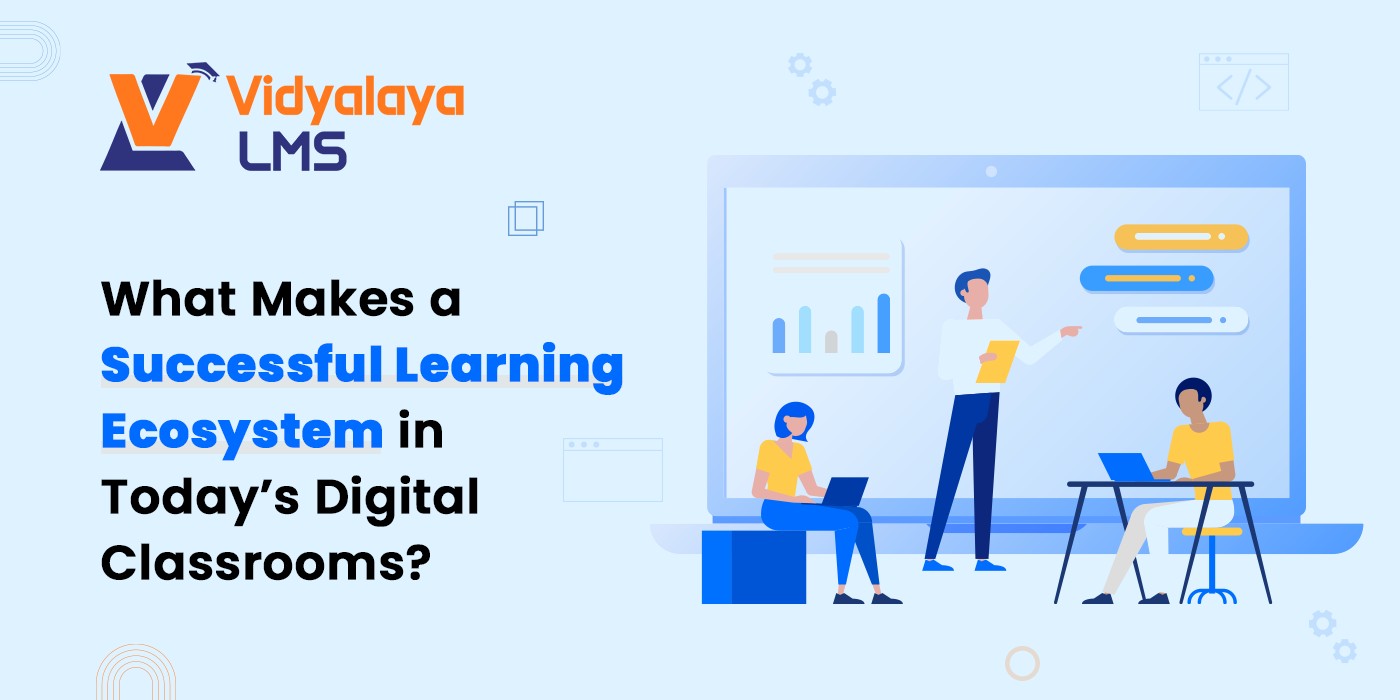
Education has moved beyond the silent rows and chalkboards, and that change is a welcome one. In their place? Classrooms that are interactive, connected, and buzzing with technology. At the centre of it all is something called the learning ecosystem — a living, breathing network where people, tools, and ideas all work together to make learning better.
Understanding the Learning Ecosystem Model:
It’s like friends chatting and learning from each other, not just one person talking. That might look like:
- Students debating ideas in an online forum.
- Virtual simulations that make abstract ideas come alive.
- Instant feedback from AI tools helps a learner adjust right away.
The goal? Keep learning, personalized, collaborative, and accessible, no matter where you are.
From Traditional Classrooms to Digital Learning Ecosystems:
A digital learning ecosystem isn’t just swapping a textbook for a tablet.
It’s about making learning:
- Flexible – learn at home, on the bus, or during a lunch break.
- Personalized – lessons adapt to your pace, not the other way around.
- Collaborative – real conversations, even if everyone’s behind a screen.
It’s like learning all through the day, in ways that fit you best, instead of only following one set school timetable.
Key Components of a Modern Learning Ecosystem:
A modern learning ecosystem needs more than gadgets. It’s about how all the parts work together.
Here’s what matters:
- Engaging content — videos, games, and activities that pull students in.
- Assessment and feedback — quick, clear insights into progress.
- Teacher support — ongoing training to keep skills sharp.
- Community involvement — parents, mentors, and peers adding value.
Challenges in Building Digital Learning Ecosystems:
It’s not all smooth sailing. Some common hurdles include:
1. Technological Barriers:
Access to devices and reliable internet remains a significant hurdle for many students, particularly in underserved areas. Ensuring that digital platforms work across various devices and operating systems is also a challenge, as compatibility issues can hinder the user experience.
2. Digital Literacy Gaps:
Both students and educators may lack the necessary skills to effectively navigate digital learning environments. While students are often digital natives, teachers may require ongoing training to integrate technology into their teaching methods.
3. Student Engagement and Motivation:
Digital learning can lead to feelings of isolation and disconnection, affecting student motivation. Without in-person interaction, it’s harder to maintain focus, build relationships, and foster a sense of community among students.
4. Data Privacy and Security:
With the rise of digital platforms, safeguarding student data is crucial. Institutions must ensure compliance with privacy laws and implement robust cybersecurity measures to protect sensitive information from breaches.
5. Cost and Sustainability:
Building and maintaining digital ecosystems can be costly. Many institutions struggle with securing the funds needed for both technology and ongoing support, particularly in the long run.
6. Quality Control:
The quality of digital content varies, and ensuring that online courses meet high educational standards is a challenge. Institutions must work to maintain consistency and rigor in digital offerings to match traditional education.
Why a Modern Learning Ecosystem Matters?
1. Adaptability to Change:
Modern learning ecosystems are flexible and adaptive, allowing both educators and students to quickly adjust to changes in curriculum, technology, and learning needs. This adaptability is crucial in an ever-evolving digital landscape.
2. Personalized Learning:
A modern ecosystem supports personalized learning paths, catering to individual strengths, weaknesses, and learning preferences. This ensures that students learn at their own pace, making education more inclusive and effective.
3. Enhanced Collaboration:
Digital tools and platforms in a modern learning ecosystem foster collaboration between students, teachers, and peers.
4. Engagement and Motivation:
Interactive content, gamification, and multimedia-rich resources engage students more effectively than traditional methods. A modern ecosystem makes learning enjoyable, encouraging active participation and deeper retention.
5. Access to a Global Learning Network:
Modern learning ecosystems break down geographical and cultural barriers, providing students access to a global network of knowledge, diverse perspectives, and experts from around the world.
6. Data-Driven Insights:
With real-time analytics and feedback, educators can monitor student progress, identify gaps, and make informed decisions to improve learning outcomes. This data-driven approach helps ensure that every student stays on track.
7. Supports Lifelong Learning:
Modern ecosystems are not limited to traditional schooling. They support continuous, lifelong learning by offering flexible, on-demand resources and courses that individuals can access at any stage of life, helping them upskill and reskill.
Final Thoughts:
At Vidyalaya LMS, we provide schools with the tools to build these dynamic, adaptive learning environments. Our platform enables schools to offer tailored learning paths, foster collaboration among students and teachers, and track real-time progress using data-driven insights. This not only enhances the quality of education but also helps institutions improve student outcomes and ensure that no learner is left behind.
A modern learning ecosystem is also essential for fostering a global learning community. With Vidyalaya LMS, schools can break down geographical barriers, enabling students and educators to collaborate, learn from one another, and access a wealth of resources and expertise worldwide.
In essence, a modern learning ecosystem powered by Vidyalaya LMS is a vital asset for schools aiming to provide high-quality, future-ready education while meeting the demands of the digital age.