






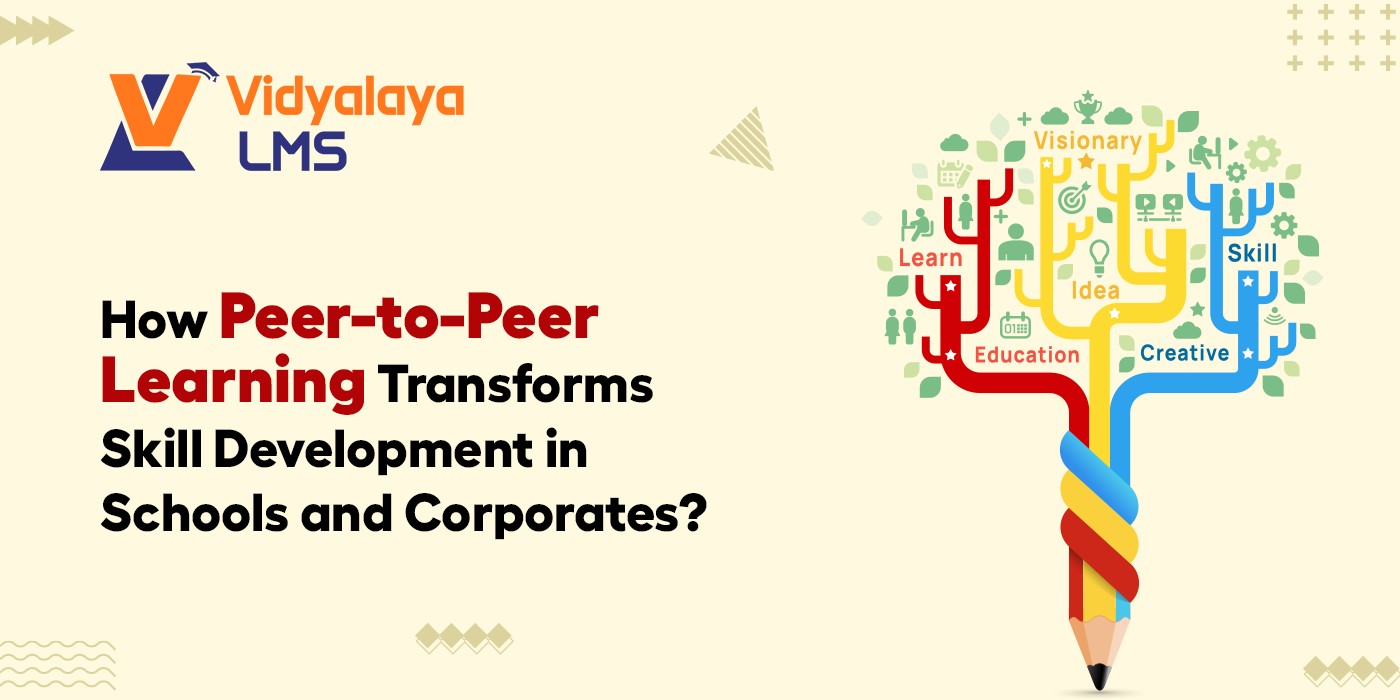
Skill development today depends less on one-way instruction and more on how effectively learners connect, collaborate, and exchange knowledge. Across both educational institutions and corporate environments, Peer-to-Peer Learning is emerging as a preferred approach for building practical skills and fostering deeper understanding. With the support of modern LMS platforms and AI-driven learning tools, institutions can enable learning experiences where students and employees learn with and from one another—resulting in stronger communication abilities, greater engagement, and higher knowledge retention.
Whether it’s students working on classroom projects, teams collaborating on problem-solving tasks, professionals upskilling for new roles, or employees participating in leadership training, Peer Learning promotes confidence, teamwork, and applied understanding—outcomes that traditional instruction alone cannot produce. This collaborative model turns learning into an active, meaningful process rather than a passive one.
This blog explores the transformative power of Peer-to-Peer Learning, highlights why it has become essential in today’s learning ecosystems, and explains how schools and organizations can enhance skill development through structured, technology-enabled collaborative learning practices.
Why Peer-to-Peer Learning Is Gaining Popularity?
Modern learners need more than theoretical knowledge—they need:
- Practical problem-solving skills
- Critical thinking abilities
- Communication and teamwork
- Leadership qualities
- Real-world application
Peer-Supported Education helps achieve all of this by shifting the learning process from passive to active.
Here’s why institutions are adopting it:
- Learning becomes faster when peers explain concepts in relatable ways.
- Group interactions increase retention by 60–70% (as per learning pyramid studies).
- It encourages active participation rather than one-way teaching.
- Students/employees feel more comfortable asking doubts in a peer setting.
- It builds social confidence and shared responsibility.
With digital transformation and the rise of remote/hybrid learning, Collaborative Learning—supported by strong digital tools—has become a crucial part of effective skill development.
How Peer Learning Improves Skill Development?
1. Developing Critical Thinking Skills Through Real-World Applications:
Learners’ analytical skills are enhanced when they engage in discussing case studies and/or solving problems together while developing their skills through collaboration via debate.
This mirrors real workplace situations, making students and employees more future-ready.
2. Improved Interpersonal and Communication Skills:
The ability to explain an idea/ concept to another person requires patience, clarity, and a high level of confidence.
In group tasks, learners organically develop:
- Leadership skills
- Listening abilities
- Negotiation skills
- Emotional intelligence
These soft skills are essential for both academic success and corporate growth.
3. Promotes Accountability and Active Engagement:
Peer groups create a sense of shared responsibility.
Learners become more serious about deadlines, task quality, and participation.
4. Encourages Application-Based Understanding:
When peers collaborate, they often apply concepts practically.
This strengthens learning far more than rote memorization.
5. Creates an Inclusive Learning Environment:
Peer learning benefits all types of learners—slow learners get support, while advanced learners strengthen their knowledge by teaching others.
It is one of the most inclusive and effective cooperative learning strategies.s
Peer Learning in Corporates: A Powerful Skill-Building Tool
Today’s corporate world values cross-functional collaboration.
Organizations use peer-driven learning formats such as:
- Peer mentoring programs
- Knowledge-sharing sessions
- Skill-swap learning groups
- Team-based project workshops
- Leadership peer pods
These formats help employees learn tools, technologies, and managerial skills faster—while building a culture of continuous learning.
Digital platforms make this even smoother by enabling:
- Remote peer collaboration
- Document & resource sharing
- Discussion rooms
- Peer evaluation features
- Skill analytics
This ensures learning continues anytime, anywhere.
How AI-Powered LMS Systems Strengthen Peer-to-Peer Learning?
Traditional peer learning was limited by time and physical presence.
Today’s AI Learning Management System removes all barriers.
With an advanced LMS Learning System, institutions can:
- Create digital peer groups & collaborative communities: Learners can connect for discussions, group assignments, and shared tasks.
- Enable AI-based personalized peer recommendations: AI suggests peer partners based on skills, learning style, or performance level.
- Provide digital tools like forums, group chats & collaborative workspaces: All interactions happen on a centralized digital platform.
- Track participation & collaboration analytics: Teachers, HR managers, or training heads get insights into engagement levels.
- Offer gamified group activities: Badges, leaderboards, and group tasks make learning more active and enjoyable.
Conclusion:
As learning needs evolve, institutions must move beyond traditional teaching methods and embrace collaborative learning that builds real-world competencies. Peer-to-Peer Learning, when integrated with a modern LMS, enhances engagement, boosts retention, and prepares learners for the challenges of academic and professional environments.
Vidyalaya LMS brings this transformation to life with AI-powered peer recommendations, collaborative workspaces, discussion forums, and analytics that help educators and HR teams create meaningful learning interactions. By streamlining group tasks, peer mentoring, and skill-sharing activities, our LMS ensures faster and more effective skill development.
To explore how Vidyalaya LMS can revolutionize your institution’s learning ecosystem, contact us for a free demo.