





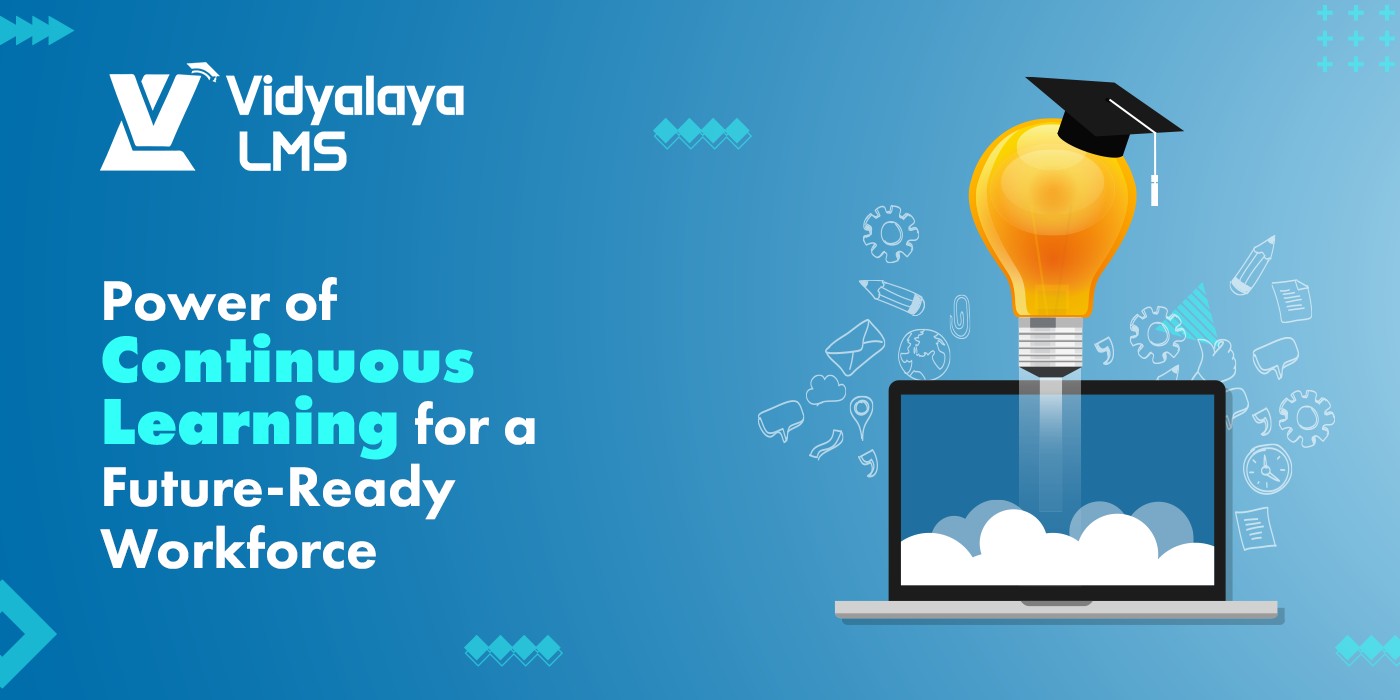
Most organizations were unprepared for the speed of the changes occurring because of the global economy’s changing nature due to technology. Companies must adjust their strategies continuously because technology is evolving rapidly, and therefore, the jobs and skills of yesterday will no longer apply today. In this type of environment, companies that are successful and succeed in the future will be those that adopt a Continuous Learning approach to business, rather than just doing one-off projects.
An organization needs to continuously develop its workforce with ongoing professional development and a culture of learning. A successful workforce is the product of an organization that is committed to creating an environment of ongoing growth and curiosity through a variety of means, not just occasional training sessions. Today’s organisations must embrace Peer-to-Peer Learning, and Modern Learning Technologies, such as Next Learning Platforms, for organizations to create the infrastructure necessary to continue providing opportunities for current and future employees to gain new skills and knowledge.
Learning Is No Longer Separate from Work:
In the past decade, one of the largest transitions has been that of an understanding that you cannot learn anything without putting that knowledge back into your daily job. Employees do not wish to attend Random Training Courses; instead, they want to take advantage of their training while performing their jobs.
Continuous skill development is critical now. Individuals develop skills through continuous experience, use, and feedback over an extended period. Just attending a workshop usually does not lead to significant improvement in one’s abilities; however, through continuous learning, individuals can grow incrementally and consistently.
Organizations that embrace this approach create environments where learning feels natural, not forced.
Changing Role of Learning and Development:
Learning and development teams are no longer just content providers. Their role has expanded into strategic partners who support business growth.
A modern learning and development strategy focuses on:
- Preparing employees for future roles
- Supporting performance today
- Encouraging adaptability at every level
This strategy must be flexible enough to evolve with the organization. Static learning plans quickly lose relevance in fast-moving industries. Continuous Learning ensures that development efforts remain aligned with real business needs.
Adaptive Learning Makes Learning Personal Again:
Every employee brings different experiences, strengths, and gaps to the workplace. Yet traditional training often treats everyone the same. Adaptive Learning changes that dynamic.
It provides tailored content and a tailored learning path for each learner based on their current performance level and personal requirements. This means that rather than just continuing to cover things already mastered by an employee, Adaptive Learning shifts the emphasiston what else the employee must know to develop further in their respective job(s). When people feel that learning is designed for them, engagement increases.
Why the Next Learning Platform Matters?
Technology is the foundation that allows Continuous Learning to scale. A modern learning platform goes beyond hosting courses. It connects learning to work, performance, and collaboration.
Employees can access learning when challenges arise, not weeks later. Managers gain insights into skill gaps and progress. Learning teams can adjust programs based on real data, not assumptions.
Traditional Systems vs Next Learning Platform:
|
Area |
Traditional Systems |
Next Learning Platform |
|
Learning access |
Scheduled |
On demand |
|
Personalization |
Limited |
Adaptive Learning |
|
Engagement |
Passive |
Interactive |
|
Knowledge sharing |
Minimal |
Peer-to-Peer Learning |
|
Insights |
Basic reports |
Actionable analytics |
Peer-to-Peer Learning Builds Real Capability:
Much of what we learn in an organization occurs informally. Employees interchange knowledge and ideas daily by asking questions and providing each other with insight. Peer-To-Peer Learning has been developed to realize this natural exchange of knowledge in the workplace by providing structure and support to those engaged in informal learning experiences.
When organizations encourage Peer-to-Peer Learning, knowledge moves faster. Best practices spread organically. Employees feel confident contributing what they know, even if they are not formal trainers.
This approach also reinforces a culture of professional continuous learning. Learning becomes something people do together, not something delivered to them.
Benefits of Peer-to-Peer Learning:
|
Benefit |
Outcome |
| Faster problem solving | Reduced dependency on formal training |
| Stronger collaboration | Improved teamwork |
| Knowledge retention | Learning through teaching |
| Engagement | Sense of ownership |
Continuous Learning and Employee Retention:
People stay where they grow. This statement holds across industries and roles. Employees who see clear opportunities for learning and development are more likely to stay engaged and committed.
Continuous learning has the added benefit of aiding career mobility, beyond merely how well an employee performs in their current position; it also gives employees a view into their future with the organization through professional continuous learning, which shows that growth is an expectation, supported and valued.
This mindset benefits both employees and employers.
Designing a Learning Strategy for the Long Term:
A sustainable learning and development strategy does not chase every new trend. It focuses on principles that last.
Key Elements of a Future-Ready Learning Strategy:
|
Element |
Why It Matters |
| Continuous Learning | Builds adaptability |
| Adaptive Learning | Respects individual needs |
| Peer-to-Peer Learning | Scales internal expertise |
| Next Learning Platform | Enables learning in the flow of work |
| Leadership support | Reinforces learning culture |
When these elements work together, learning becomes part of how the organization operates, not a separate function.
Looking Forward: Learning as a Daily Practice
The future of work will continue to change, often in unexpected ways. Organizations cannot prepare for every scenario, but they can prepare their people to learn continuously.
Continuous Learning creates confidence in uncertainty. It allows employees to adapt, grow, and contribute meaningfully even as roles evolve. Supported by Peer-to-Peer Learning and a strong Next Learning Platform, it becomes a daily practice rather than a periodic activity.
In the end, the most successful organizations will not be defined by how much they know today, but by how effectively they keep learning tomorrow.
Conclusion:
Continuous learning has become a critical driver of business success, enabling organizations to stay agile, close skill gaps faster, and build a workforce that is ready for constant change. Companies that embed learning into daily work see higher employee engagement, improved performance, and stronger retention—making learning a long-term investment rather than a short-term activity.
To achieve this, organizations need the right learning infrastructure. Vidyalaya LMS helps businesses move beyond traditional training by enabling adaptive learning, peer-to-peer collaboration, and learning in the flow of work. With real-time insights and personalized learning journeys, Vidyalaya LMS aligns employee development with measurable business outcomes.
If you’re ready to build a future-ready workforce through continuous learning, contact us today for a free demo of Vidyalaya LMS and see how our platform can help you drive growth, engagement, and performance—starting now.