





Healthcare organizations operate in one of the most highly regulated and training-intensive environments, where maintaining staff certifications, ensuring compliance, and delivering continuous clinical education are critical to patient safety and operational excellence. Yet many hospitals, clinics, and healthcare institutions still rely on disconnected systems, manual spreadsheets, and time-consuming administrative processes to manage employee training and certification tracking. These inefficiencies often lead to missed renewal deadlines, compliance risks, reporting challenges, and increased administrative burden for training and HR teams.
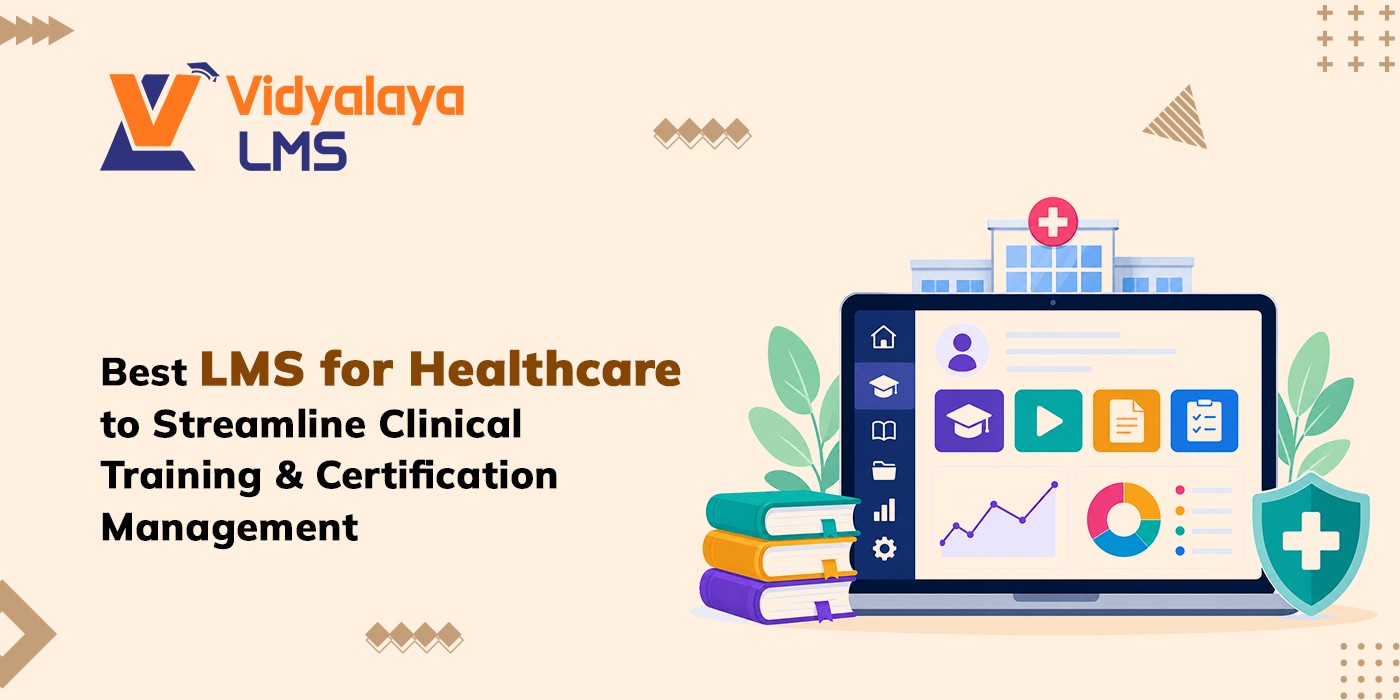
A modern Healthcare Learning Management System (LMS) addresses these challenges by centralizing clinical training, certification management, compliance tracking, and performance reporting within a single platform. By automating training workflows, sending timely certification reminders, and providing real-time visibility into employee learning progress, the best LMS for healthcare organizations helps improve workforce readiness, streamline regulatory compliance, and reduce operational costs. In this guide, we’ll explore the best healthcare LMS solutions that enable hospitals and healthcare providers to deliver effective training programs while maintaining the highest standards of compliance and patient care.
Why the Old Approach Doesn’t Hold Anymore?
Healthcare training was never simple. But for a long time, the complexity was manageable — annual in-person refreshers, a binder of completed sign-off sheets, a calendar reminder before JCAHO visits. Most organisations got by.
That version of manageable is gone. Today’s clinical environment involves rotating staff, contract nurses, multi-site operations, mandatory CEUs, department-specific compliance tracks, and regulatory requirements that change with more frequency than anyone would like. The informal systems that kept things running — the tracking spreadsheet, the reminder email chain, the one coordinator who has everything in her head — are showing cracks.
And the real cost isn’t usually a failed inspection. It’s smaller than that. It’s the hours spent tracking down completions. The delay between someone being hired and being cleared to work independently. The recertification lapses because the reminder went out too late to a shared inbox nobody monitors.
A Healthcare LMS doesn’t solve every problem. But it addresses the ones that are quietly draining time and creating risk at the same time.
What Changes When the Right System Is in Place?
The vendors will show you dashboards. Clean ones, with colour-coded compliance rates and automated workflows that look very satisfying in a product demo. What changes in the first few months — the shift that people mention when they’re being honest — is that someone stops being the system.
In most healthcare organisations, compliance tracking and training coordination run on a person. That person is good at their job, is carrying an unsustainable amount of institutional knowledge, and has built workarounds that function right up until they go on leave. A Healthcare Learning Management System that’s properly implemented shifts that load off the individual and into a platform that can be queried at 11 pm without bothering anyone.
The other shift is visibility. Most organisations have a rough sense of where their compliance stands. A good Healthcare LMS gives them an exact sense — by department, by individual, by credential type, updated continuously without anyone running a report. That’s a different kind of confidence to walk into an audit with.
What Does the Best LMS for Healthcare Actually Handle Well?
Not every platform built for learning management translates cleanly to a clinical environment. Healthcare has requirements that generic corporate LMS systems weren’t designed around — mandatory competency tracking, credential-specific renewal cycles, and skills verification that goes beyond a completed quiz.
1. Certification tracking:
BLS, ACLS, HIPAA training, department-specific compliance — the timelines are different, the renewal requirements vary, and the consequences of a lapse are not minor. A Healthcare LMS built for clinical environments tracks all of it by individual, sends renewal reminders automatically at intervals that give people time to act, and surfaces upcoming expirations at an organisational level without anyone having to compile a report first.
2. Onboarding:
There’s a version of onboarding that exists in most hospitals where a new hire spends their first week waiting — waiting for paperwork, waiting for a training slot, waiting to be cleared for independent practice. The modules exist. The assignments happen automatically. The manager can see where someone is without asking.
3. Consistent training across locations.
The gap between how training is delivered at the flagship facility and how it gets done at a smaller satellite site is a real compliance risk that rarely gets surfaced until something goes wrong. Centralising content delivery through a Healthcare LMS doesn’t eliminate local adaptation — it ensures the baseline is consistent everywhere.
4. Competency verification:
Finishing a module and demonstrating competency are not the same thing, and accreditation bodies are clear on that distinction.
5. Reporting:
Compliance reports, training gap analyses, department-level completion rates — these are genuinely necessary documents that shouldn’t require someone to spend three days assembling them manually.
What Smaller Healthcare Organisations Often Miss?
The assumption, often, is that a purpose-built Healthcare LMS is something that makes sense for a large hospital system — the kind of organisation with a dedicated L&D team and an IT department that can manage an implementation. Smaller clinics, community health centres, and independent practices often assume they’re not the target audience. That assumption usually costs them.
Smaller organisations tend to have the fewest people available to maintain manual compliance systems and the highest per-person impact when one credential lapses. A coordinator managing training for thirty staff members across two locations, without a system built for it, is carrying a risk that scales in the wrong direction as the organisation grows.
What to Evaluate When You’re Comparing Options?
Does the platform handle the specific credential types of your staff hold — not just generic training modules, but the renewal cycles and documentation requirements that come with clinical certifications? How does it behave across multiple locations or departments with different compliance requirements? And when something goes wrong — a lapsed credential, a failed audit finding — how does the system help you trace back what happened and demonstrate corrective action?
The best LMS for Healthcare isn’t the one with the most features in the catalogue. It’s the one that fits how your organisation runs clinical training — and then quietly makes that process less fragile than it currently is.
Conclusion:
As healthcare organizations continue to face increasing regulatory requirements, workforce challenges, and the need for continuous clinical education, relying on manual training management processes is no longer a sustainable strategy. The right Healthcare Learning Management System not only simplifies certification tracking and compliance management but also helps organizations reduce administrative workload, improve staff readiness, minimize compliance risks, and create a more efficient learning ecosystem. Investing in a modern LMS is ultimately an investment in patient safety, operational excellence, and long-term organizational growth.
If you’re looking for a reliable and scalable Healthcare LMS that streamlines clinical training, automates certification management, and provides real-time compliance visibility, Vidyalaya LMS can help. Contact us today for a free demo and discover how Vidyalaya LMS can help your organization improve training outcomes, strengthen compliance, and build a future-ready healthcare workforce.