







Traditional teaching methods often emphasize memorization and passive learning, but today’s education landscape demands a more practical and skill-focused approach. Students are expected to think critically, solve complex challenges, collaborate effectively, and apply knowledge in real-world situations. This shift has increased the demand for innovative teaching strategies and student engagement software that improve student engagement, strengthen critical thinking, and deliver better learning outcomes. Among these modern approaches, Problem Based Learning (PBL) has emerged as a highly effective methodology for preparing learners with the skills required for academic and professional success.
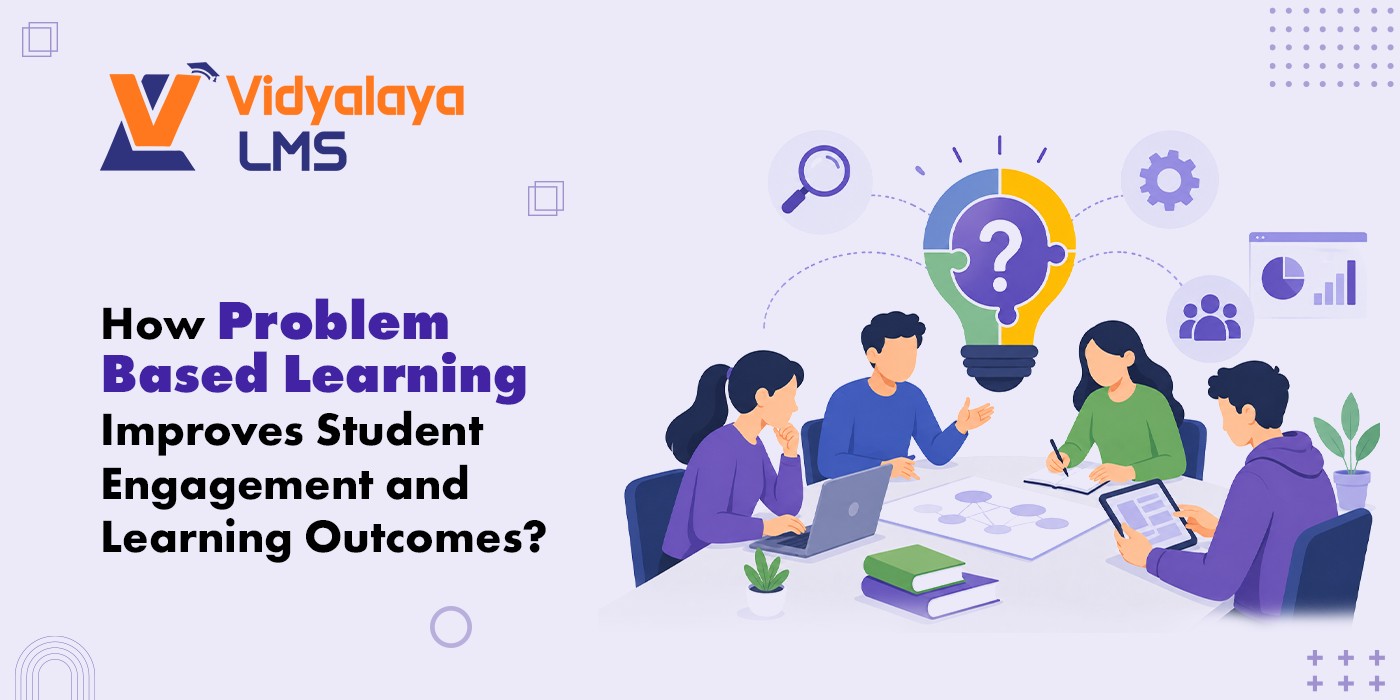
Student Centered Learning is an instructional approach where learners actively explore real-life problems, analyze different perspectives, and develop practical solutions through research, collaboration, and decision-making. Instead of relying solely on lectures, PBL in Education encourages active participation, independent learning, and knowledge application, creating a more interactive and meaningful learning experience. Whether implemented in schools, colleges, universities, corporate training, or professional development programs, Problem Based Learning empowers educators to foster deeper understanding, higher student engagement, and long-term academic achievement while exploring how to improve student engagement.
What Is Problem Based Learning?
It is an instructional approach where learning begins with a problem rather than a direct explanation of a topic. Learners work individually or in groups to understand the problem, identify possible solutions, collect information, and present their findings.
As an example, rather than merely focusing on lectures when teaching environmental principles, teacher might allow students to create solutions for the problem of waste reduction in the home community. In the process of this task, students not only become acquainted with environmental science, but also develop their research, communication and decision-making skills.
This technique has a strong link with Inquiry-Based Learning and involves students developing their knowledge by questioning and seeking answers. This also promotes inquisitiveness and creates meaningful links between learning experiences and daily life situations.
Why Student Engagement Matters in Learning?
Student engagement is important for learning to work. When students are taking part and doing things they can understand things better remember what they learned and use what they know.
A lot of students get bored when they just must sit and listen to someone talk and then write down what they said. But when we make learning fun like when students get to talk about things try out new ideas and figure out problems it is a totally different story.
When students work on problems and try to solve them, they start to feel like they’re really a part of their own learning. They are not just sitting there listening to someone. Student engagement like this helps students feel more excited about learning. It makes them feel more confident, about what they can do.
How Problem Based Learning Improves Student Engagement?
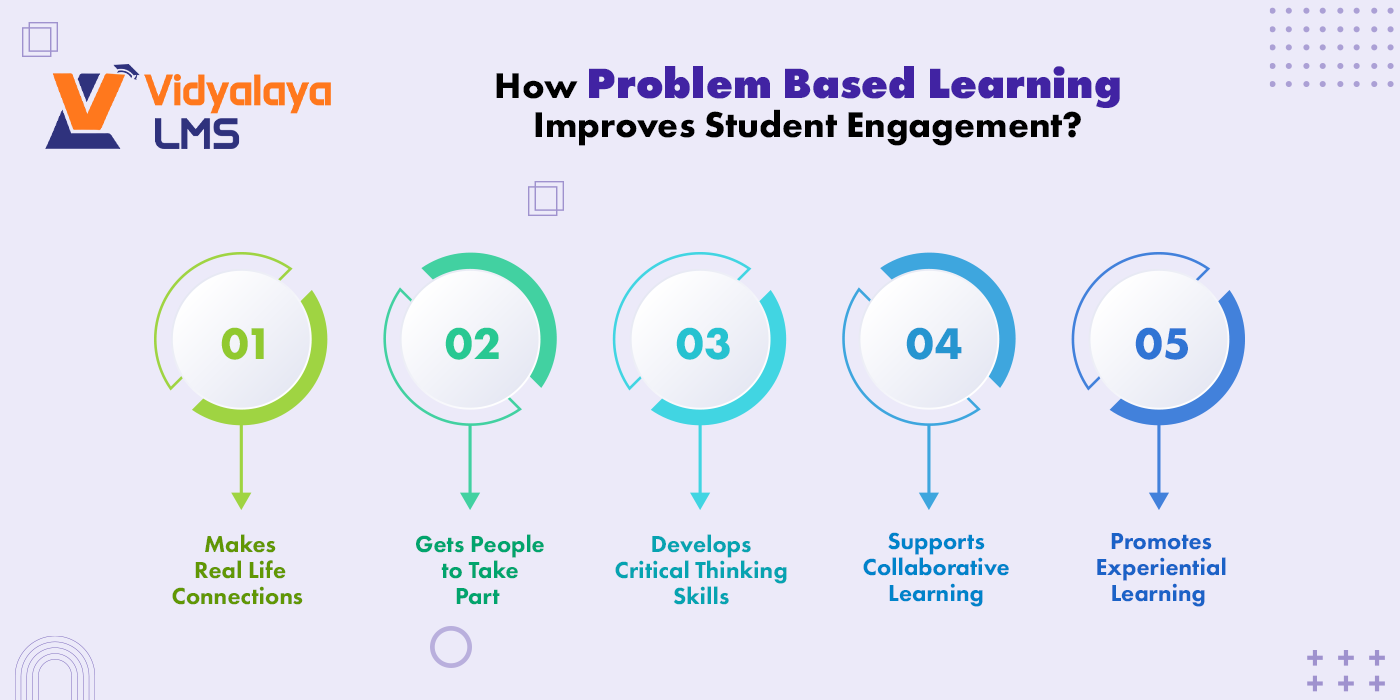
1. Makes Real Life Connections:
One of the things is that it helps students see how what they learn is used in real life. Students understand what they are learning. Why it is important.
For example, a business student may figure out how to solve a marketing problem an engineering student may think of ways to fix an issue, or a corporate trainee may work on things that happen at work.
2. Gets People to Take Part:
In style classrooms students usually wait for teachers to tell them everything. Active Learning makes students do things for themselves. It makes them take part look for answers and find out things on their own.
When students do Project Based Learning, they talk about ideas look at information try out solutions and think about how they’re doing. This makes learning fun and people are more likely to get involved.
3. Develops Critical Thinking Skills:
These days jobs need people who can figure out what is going on and solve problems. It helps people who are learning to think by making them look at things from different angles.
People who are learning do not just remember facts they look at information compare ways to solve a problem and make smart decisions about what to do. They really think about the information. Make choices based on what they have learned which helps them develop critical thinking skills.
4. Supports Collaborative Learning:
A lot of life problems need people to work together. Collaborative Learning is a part of PBL because learners usually work in groups to solve problems.
When people work together, they get better at talking to each other being a leader dealing with disagreements and working together. These skills are useful in school. Also, when you have a job.
5. Promotes Experiential Learning:
People learn better when they apply theories in actual situations. The concept of Experiential Learning can help people learn things by doing projects, getting involved in activities and simulating situations.
The goal of education is not only completing courses but also developing useful knowledge and skills. It improves learning outcomes in several ways:
| Learning Area | Impact of Problem Based Learning |
| Knowledge Understanding |
|
| Problem-Solving Skills |
|
| Communication Skills |
|
| Confidence |
|
| Creativity |
|
| Long-Term Retention |
|
How Organizations Can Implement Problem Based Learning?
Implementing PBL in Education requires careful planning. Organizations can start with small activities and gradually introduce larger problem-based projects.
Some effective steps include:
- Identify real-world problems related to the learning topic.
- Encourage learners to ask questions and research solutions.
- Provide guidance instead of directly giving answers.
- Create opportunities for teamwork and discussion.
- Use technology tools to support learning activities.
- Evaluate both the process and final outcomes.
A successful PBL environment requires instructors to act as facilitators who guide learners throughout the learning process.
Future of Problem Based Learning:
The future of education will focus more on skills, creativity, and practical knowledge. As industries continue to change, learners need the ability to adapt and solve new challenges.
Approaches like Problem Based Learning, Student-Cantered Learning, and Inquiry-Based Learning will continue to grow because they prepare learners for real-world situations.
By combining Active Learning, Collaborative Learning, and Experiential Learning, education can become more meaningful, engaging, and effective for everyone.
Conclusion:
Problem Based Learning is transforming the way educational institutions and organizations deliver knowledge by creating engaging, practical, and outcome-driven learning experiences. By encouraging critical thinking, collaboration, and real-world problem-solving, this approach helps learners develop the skills needed for long-term academic and professional success. When combined with the right Learning Management Software, educators can efficiently design, manage, track, and assess problem-based learning activities while improving learner participation and overall training effectiveness. Problem based learning in education provides educators with an effective approach to creating meaningful and practical learning experiences.
As the demand for modern, learner-centric education continues to grow, adopting innovative teaching strategies and digital learning solutions has become essential for schools, colleges, universities, and corporate training providers. If you’re looking to implement a powerful LMS that supports interactive learning and enhances educational outcomes, Vidyalaya LMS is here to help. Contact us today for a free demo and discover how our LMS can simplify learning management while delivering a more engaging and impactful learning experience.