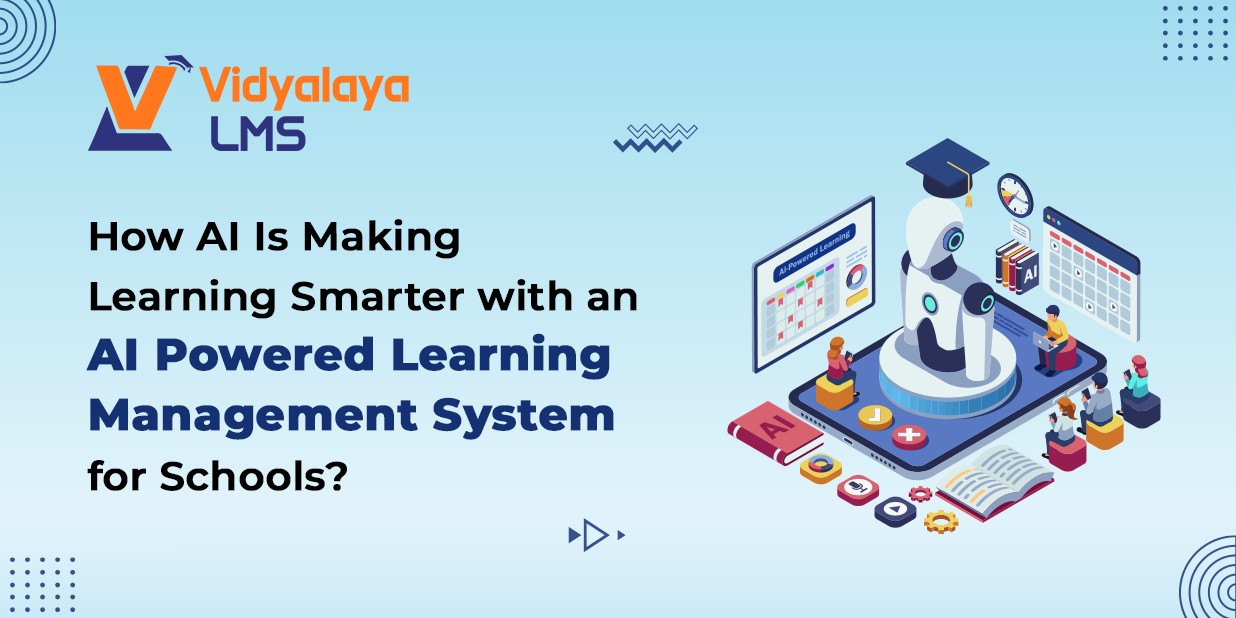






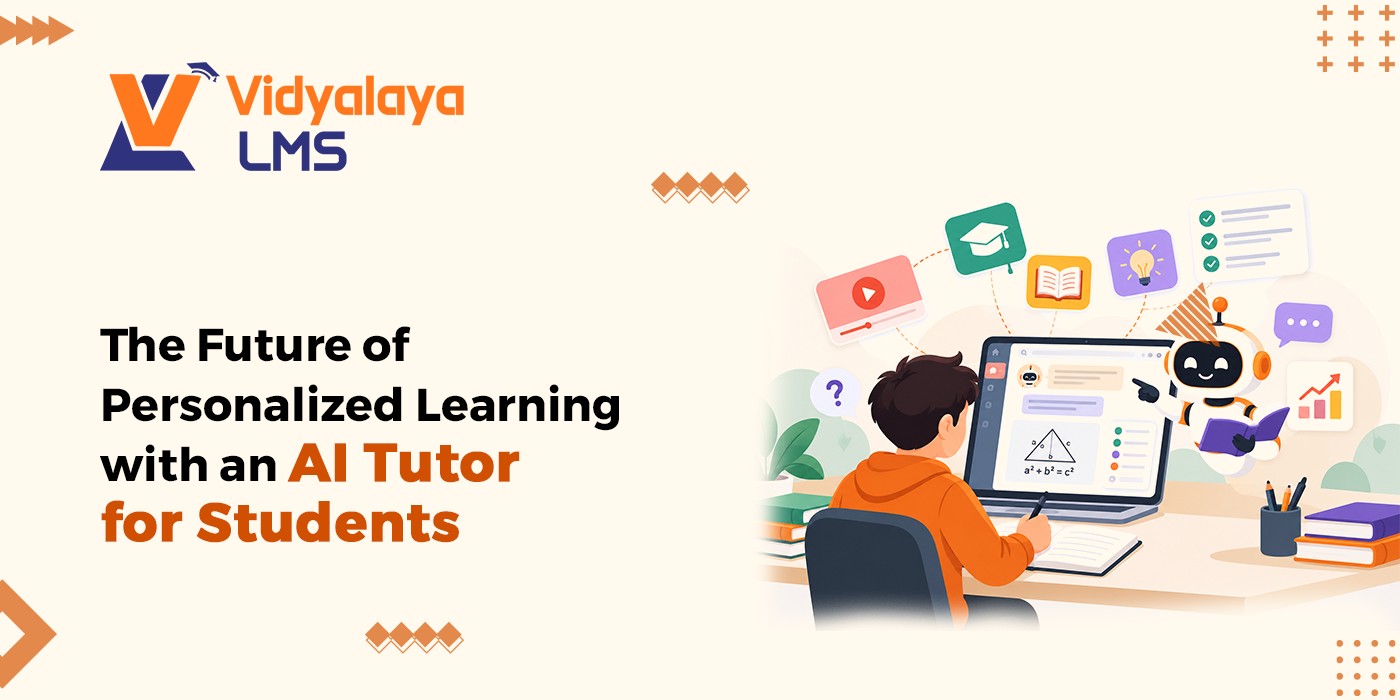
Every student learns differently. In a classroom, some students understand concepts quickly, while others need more time, examples, or personalized guidance. An AI Tutor For Students can help bridge this gap by delivering personalized explanations, instant feedback, and learning support based on each student’s pace and needs.
AI tutors are not designed to replace teachers, but to support them. When integrated with a Learning Management System (LMS), AI can make personalized learning more accessible, scalable, and effective—helping educators provide better learning experiences while keeping students engaged and progressing at their own pace.
Why “One Explanation Fits All” Never Really Worked
Traditional teaching, even good teaching, is built around a single pace. The lesson moves forward on a schedule, and students either keep up, fall behind quietly, or coast because they already know the material. A teacher managing thirty to forty students physically cannot stop and re-explain a concept five different ways for five different students without the other twenty-five losing momentum.
This isn’t a teaching failure. It’s a math problem. One instructor, finite time, a room full of different starting points and different learning speeds. Something must give, and usually it’s the students at the edges — the ones who needed more time, and the ones who needed less.
An AI learning assistant doesn’t have that constraint. It can explain the same concept a dozen different ways to a dozen different students, simultaneously, for as long as each one needs.
What Personalized Learning Actually Requires
Explanations that adapt to how a specific student learns, not just what they got wrong. A student who misses a geometry problem might need a visual walkthrough, another might need the underlying formula broken down step by step, and a third might just need a different example. A working AI tutor for students doesn’t just mark an answer wrong — it figures out why it was wrong and adjusts the next explanation accordingly.
Pacing that’s individual. In a well-built AI learning platform, a student who master’s a topic in ten minutes moves on. A student who needs forty minutes gets forty minutes, without holding up a classroom or falling behind a syllabus. Nobody’s waiting on anybody.
Visibility for the teacher, not just the student. The point isn’t to remove teachers from the loop. A good AI study assistant surfaces patterns — this student keeps stumbling on word problems, that group hasn’t touched the chapter on ratios — so a teacher can step in with the kind of judgment no algorithm has, instead of spending prep time figuring out who needs help in the first place.
Where Schools Get This Wrong
The most common mistake is treating an AI tutor as a replacement for teaching rather than an extension of it. Schools that roll out an AI tutor for schools expecting it to run the classroom on its own usually end up disappointed — not because the technology doesn’t work, but because the technology was never meant to operate without a teacher shaping what happens with what it surfaces.
The second mistake is confusing “adaptive” with “personalized.” A lot of tools adjust difficulty — get three wrong, get an easier question next. That’s not the same as understanding why a student is struggling. Real personalization means the system changes its explanation style, not just its difficulty slider.
The third mistake is rolling this out school-wide without a pilot. What works for a single classroom of curious ninth graders don’t automatically work for a district-wide rollout across five hundred students with wildly different device access, home support, and baseline skill levels. Scale exposes exactly the gaps a small pilot never would.
Where This Is Actually Heading
The next wave isn’t a smarter chatbot bolted onto existing coursework. It’s tutoring that quietly tracks a student’s understanding across an entire year — not just this week’s assignment — and adjusts what gets taught next based on where the actual gaps are, not where the syllabus says they should be by now.
Picture a student who struggled with fractions in October. A system with real memory doesn’t just move on to decimals in November and hope the fraction gap closes itself — it keeps circling back, weaving prerequisite skills into new material until they’re solid. That’s a fundamentally different relationship with a subject than “finish the unit, take the test, move on.”
The schools and companies that get real value out of this aren’t the ones buying the flashiest AI learning platform. They’re the ones that figure out where teachers add irreplaceable judgment, and let the tutor handle the repetitive, patient, infinitely adjustable parts that don’t scale well for a human.
Conclusion:
AI-powered personalized learning can help schools deliver more engaging and effective learning experiences while reducing the repetitive workload on teachers. By combining an AI tutor with an LMS, institutions can provide personalized support, track student progress, and identify learning gaps more efficiently. Intelligent Tutoring Systems can further enhance this approach by making learning more adaptive and student focused.
For educational institutions, adopting the right LMS is an important step toward scalable and personalized digital learning. Vidyalaya LMS helps institutions leverage modern LMS capabilities to improve learning outcomes, engagement, and teaching efficiency. Contact us for a free demo and discover how Vidyalaya LMS can support personalized learning at your institution.