





How a Learning Management System for Schools Transforms Modern Education?

Vidyalya LMS

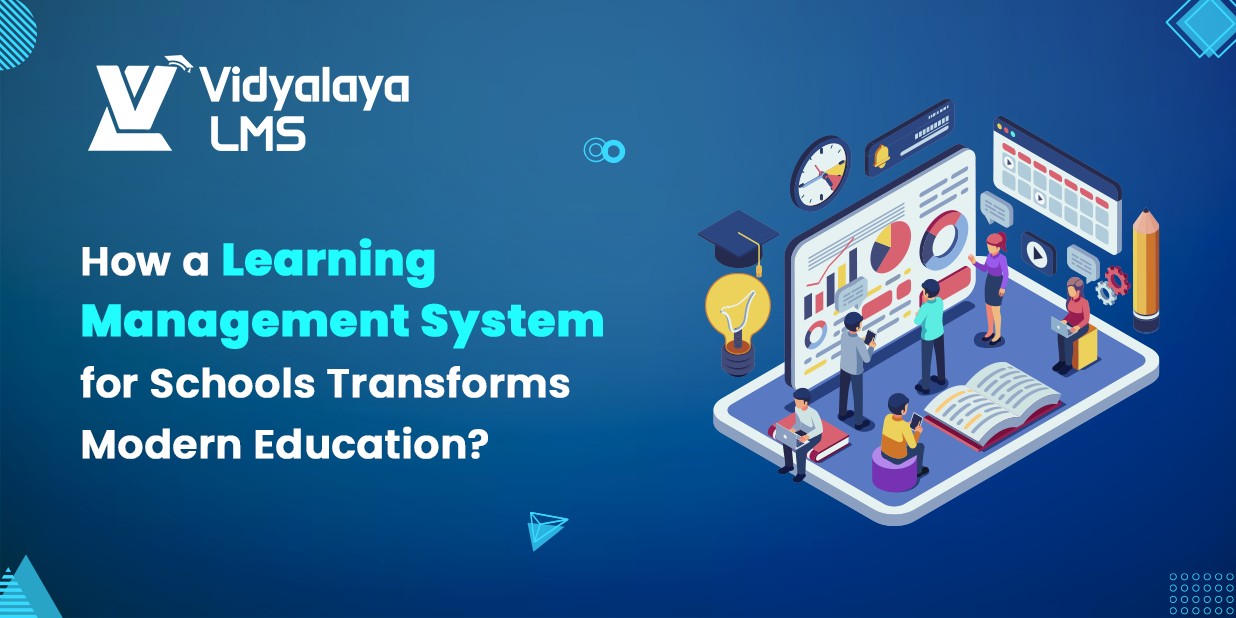
Managing a modern school involves more than delivering classroom lessons; it requires seamless coordination of academic activities, administrative tasks, and parent communication. However, relying on multiple disconnected tools for attendance, homework, examinations, student performance, and parent updates often creates unnecessary workloads, communication gaps, and operational inefficiencies. A Learning Management System for Schools addresses these challenges by bringing essential school management and learning activities together on a single, centralized digital platform. With solutions like Vidyalaya LMS, schools can streamline academic operations, simplify administrative processes, enhance teacher productivity, and keep parents informed through better communication. By replacing fragmented workflows with an integrated digital ecosystem, schools can improve efficiency, support smarter decision-making, and create a more connected, transparent, and engaging learning environment for students, teachers, and parents.

Why Scattered Tools Slow a School Down

Most schools don’t have a technology problem. They have a visibility problem. The information exists, but it sits in too many places. Take a simple case. A student misses three days of school. The class teacher may notice day two. The parents hear about it on day four. The principal finds out at the end of the month in a report. By then the student was behind in every subject, and nobody saw it happening.

Now picture the same school with an LMS attendance management system. The absence shows up on day one. The parents got a message that same morning. Nobody has to chase anybody. Teachers feel the old way too. The same information gets written twice, sometimes three times. Attendance goes into the register, then into a sheet, then into a message to the office. That’s time taken away from planning lessons or helping a student who’s stuck.

Parents get updates in pieces. A photo of the homework here, a voice note. It all gets buried in a group chat with hundreds of messages. And a student who needs help this week shouldn’t be discovered at the end of the term.

What a Good LMS Management System Actually Does

A good LMS Management System doesn’t try to replace teachers. It takes over the boring parts of the job so teachers can spend time on the parts only they can do. Different learning management system platforms add their own extras. But the useful ones all cover the same core jobs.

Start with the basics. Lessons, notes, assignments, and videos live in one place. A student who was sick on Tuesday can open the class and catch up by evening. Nobody must photocopy anything. Attendance is the next big one. With an LMS attendance management system, the teacher marks it once, on a phone or a computer. The class teacher and the principal see the same record. Monthly reports build themselves. That alone can give back hours every week.

Communication gets cleaner too. Instead of one giant group chat, parents get updates about their own child. Homework, results and notices come from one official place, so nothing gets lost in the scroll. Marks and progress are the fourth piece. Tests, assignments and report cards all feed into one record. A teacher can see how a student is doing across a term without opening three files. So can the parents.

Where Schools Get This Wrong

The most common mistake is picking from a long feature list. Schools put learning management system platforms side by side, count the ticks, and choose the one with the most. But a platform with a hundred features is useless if teachers find it confusing. The better test is simple. Can an average teacher mark attendance and set up homework without anyone helping them?

The second mistake is switching everything on at once. A new LMS Management System launched to the whole school on one Monday morning usually creates chaos. Teachers get frustrated. Parents call the office. Within a month, half of the staff is back to the register. Starting with one grade, or one function like attendance, works much better. Add more once people are comfortable.

The third mistake is running the old system and the new one forever. In the first month, that’s fine. After that, it’s double work. Teachers fill in the register and the app. They start to see the system as extra homework for them, and they stop trusting it. A school needs a date when the paper process stops. Without one, the new system never really takes over.

Conclusion:

The future of education belongs to schools that combine quality teaching with efficient digital management. Moving beyond disconnected tools is not just about saving administrative time; it is about creating a well-organized academic environment where teachers can focus on teaching, parents stay informed, and school management has better control over daily operations. Choosing an advanced AI powered LMS system can further help institutions embrace smarter academic processes, improve operational visibility, and deliver a more engaging learning experience. The right technology investment today can help schools build a scalable digital foundation that supports their evolving educational goals.

Ready to simplify school management and take your institution towards smarter digital education? Vidyalaya LMS offers an integrated solution designed to streamline academic workflows, strengthen communication, and improve overall institutional efficiency. Contact us today to Schedule your FREE DEMO and discover how the right LMS solution can transform the way your school operates.

Frequently Asked Questions

1. How does a Learning Management System improve school administration?

A Learning Management System simplifies daily school operations by centralizing attendance, homework, examinations, academic records, and communication. It reduces manual work, minimizes errors, and helps administrators manage institutional activities more efficiently.

2. How can schools improve teacher productivity using an LMS?

An LMS reduces repetitive administrative tasks by automating activities such as attendance tracking, assignment distribution, assessment management, and report generation. This allows teachers to dedicate more time to lesson planning and student development.

3. Is an LMS suitable for both small and large educational institutions?

Yes, an LMS can support schools of different sizes by offering scalable features that adapt to their operational requirements. Whether managing a single campus or multiple branches, schools can streamline academic processes through one centralized platform.

4. How does an LMS improve communication between schools and parents?

An LMS provides a centralized communication channel where parents can receive updates about attendance, homework, examination results, school announcements, and student progress. This ensures timely information sharing and strengthens parent-school engagement.

5. What features should schools consider before choosing an LMS platform?

Schools should evaluate essential features such as attendance management, online assignments, examination management, performance tracking, parent communication, automated reporting, data security, and ease of use. Selecting a platform that meets current and future requirements is important for long-term value.

6. Can an LMS support AI-powered learning and academic management?

Yes, modern AI-enabled platforms can support personalized learning, intelligent performance analysis, automated insights, and smarter academic planning. These capabilities help educators identify learning gaps and make more informed academic decisions.

7. How does Vidyalaya LMS help schools simplify digital education management?

Vidyalaya LMS helps educational institutions bring academic activities, administrative operations, and parent communication together through an integrated digital platform. It enables schools to reduce manual workloads, improve operational visibility, and manage their academic ecosystem more effectively.

8. How can schools get started with Vidyalaya LMS?

Schools can begin by understanding their operational requirements, exploring relevant LMS features, and evaluating how the platform fits their existing workflows. Contact Vidyalaya LMS to request a free demo and discover how the solution can support your institution’s digital transformation.

author

The Author

Kumaril Patel

CEO & Co-Founder

LinkedIn Icon

Kumaril Patel is the CEO & Co-Founder of Sapphire Software Solutions, a global technology company specializing in software, mobile app, and web development. With over 20 years of diverse IT leadership, he has built international business operations from the ground up and led the leading flagship digital platforms such as Vidyalaya School Management System and OccuCare Occupational Health Management System.

Kumaril is known for transforming ideas into high-impact technology solutions—leading cross-functional global teams and building innovation-driven ecosystems. His strategic vision has enabled long-standing collaborations with global enterprises including American Express, Bayer, TATA Group, Adani Group, Larsen & Toubro, Honda, Toyota and Vedanta Limited.

Passionate about innovation, AI, and cloud technologies, Kumaril focuses on empowering organizations to scale globally while solving real-world challenges through transformative digital solutions.

Related Blog

sapphire
September 30, 2026 6 min read
Education is rapidly evolving as schools embrace digital transformation to create more connected, personalized, and outcome-driven learning experiences. Traditional teaching methods centred around textbooks, classroom instruction, and standardized assessments are increasingly being complemented by intelligent digital solutions. An AI-powered Learning Management System (LMS) for schools enables educational institutions to streamline academic processes, improve learner engagement, and support teachers with data-driven insights, It also works as an effective AI teaching assistant for schools, creating a smarter and more efficient learning environment. However, simply digitizing educational content is not enough to meet the evolving needs of modern schools. An AI-powered LMS can […]
Read More Vidyalaya LMS
sapphire
September 23, 2026 5 min read
Consider the amount of knowledge generated by an educational institution daily – lesson plans, recorded classes, study materials, tests, training materials, notifications, and so on. Now, imagine wanting to find specific academic materials after months have passed since they were supposedly issued – however, they are dispersed in various emails, folders, communicating applications, and devices. This is where an LMS knowledge platform that integrates all the academic materials into one system comes into play. A modern LMS is not just a platform for course uploads or online testing anymore. By strategically using information management technology at your LMS, you can […]
Read More Vidyalaya LMS
sapphire
December 30, 2025 5 min read
Organizations and educational institutions increasingly depend on remote learning and e-learning to support a geographically distributed workforce and student base. As teams and learners operate from multiple locations, traditional methods of measuring productivity and training effectiveness have evolved. However, simply shifting existing training programs to an online format does not automatically lead to improved performance or engagement. Productivity gains are achieved only when remote learning is delivered through a well-structured, goal-oriented Learning Management System (LMS) designed to support efficient skill development and measurable outcomes. A Learning Management Software serves as a centralized platform for delivering, managing, and tracking online educational […]
Read More Vidyalaya LMS
Success Icon