







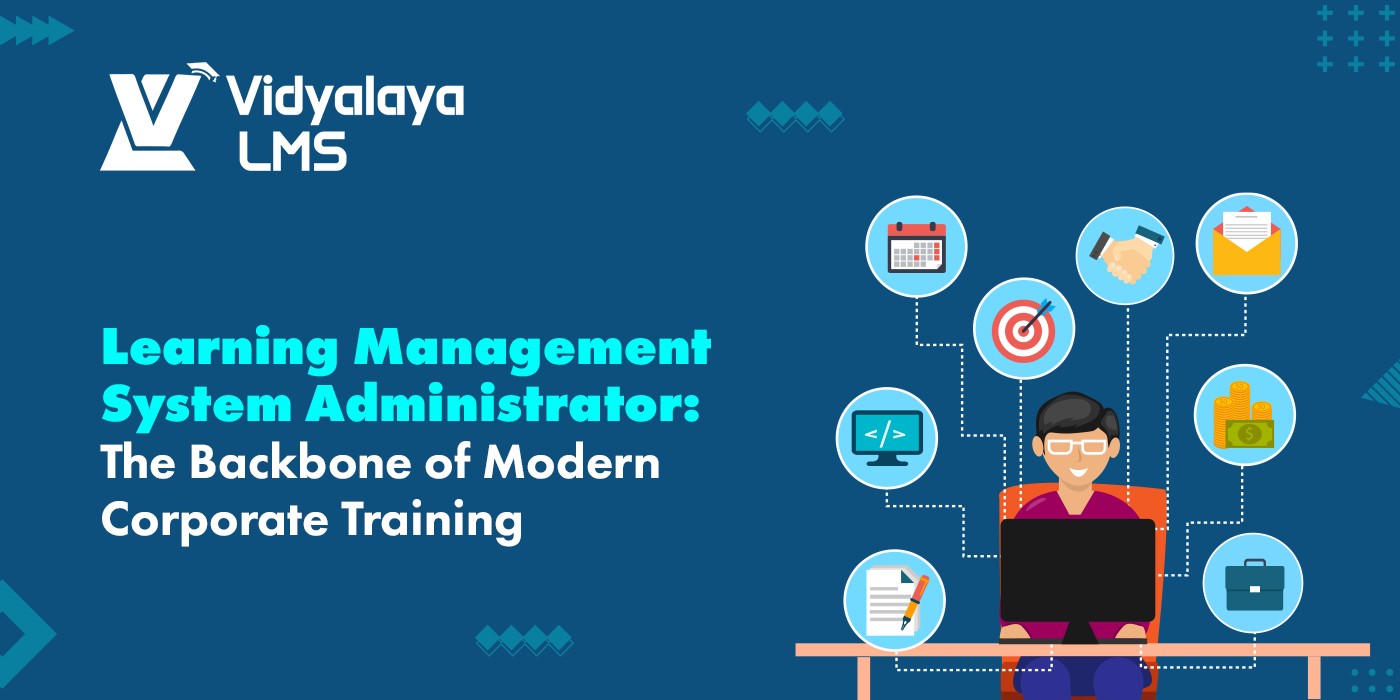
An administrator of a learning management system is vital for the management, support, and optimization of the organisation’s digital learning environment. With corporate training software becoming so important for companies to train their employees, the administrator must keep the system running smoothly to ensure that the employee has the correct learning experience. The LMS administrator serves as the operational backbone of the modern workplace learning by creating online courses, tracking learner progress, etc…
Because of the digital world we now live in, businesses are heavily investing in different platforms to improve employee productivity and performance (such as sales training software, employee onboarding software, etc.).
A Learning Management System Administrator (LMSA) is the business professional responsible for setting up, managing, and optimizing an LMS. The importance of this position has increased as businesses have expanded their training initiatives using tools such as Sales Training Software and Employee Onboarding Software.
The purpose of this blog is to explore:
- The role of a Learning Management System Administrator
- What are the key responsibilities and skills of an LMSA?
- How do LMSAs enable corporate training?
The benefit of LMS management for employee onboarding and sales training.
It is essential to understand the role of the LMSA when evaluating the success of digital learning programs because, in addition to technology, the success of your organization’s digital learning programs will depend on how well the LMS is managed by people.
What is a Learning Management System Administrator?
An LMS Administrator implements the company’s corporate learning initiatives through the company’s online learning management system (LMS). They are responsible for establishing the LMS technology configuration, supporting the LMS user community, uploading course materials, analysing system performance through reporting, and correcting any system issues that arise in day-to-day operations.
When utilizing Corporate Learning Management Systems to develop, deliver, and track employee training, LMS administrators work with the company’s HR department, Training Managers, and IT staff to establish a collaborative environment that supports ongoing training and development within the organization.
Typical tasks for an LMS administrator may include:
- Set up and maintain users and permissions in LMS application(s).
- Upload all learning courses to the LMS and organize them by topic, product, or other appropriate categories.
- Track learner progress and completion for all courses.
- Generate training records/reports and analyse training data.
- Perform regularly scheduled software updates and integrate with other company systems.
If not administered properly, even the best Corporate Sales Training or Corporate Employee Onboarding solutions may result in poor training performance by the employees.
Why LMS Administrators Are Important for Corporate Training?
The evolution of corporate education has been extraordinarily quick during recent years, leading industry observers to predict that by 2028 the global corporate e-learning market will be more than $460 billion (£340 million), making it clear that digital learning platforms are here to stay.
Companies use Corporate Training Software to offer employees continuous learning, compliance, and skills development, but the sophistication of the learning platform means these systems need a dedicated administrator.
The primary responsibilities of an LMS Administrator are:
- To ensure the smooth operation of the learning management system.
- To ensure that employee training is accurately tracked.
- To ensure that course information is organized correctly.
- To ensure that learners are engaging positively with the learning management system.
Without an effective administrator, there can be many challenges for an organization regarding the use of its learning management system, such as incomplete training records, technical errors, and poorly structured programs.
Key Responsibilities of an LMS Administrator:-
An LMS Administrator has many different duties that make sure the LMS runs well.
1. Software Setup and Maintenance:
The administrator sets up the LMS and configures the system settings based on the needs of the organization.
2. User and Access Management:
The administrator must manage many thousands of users within the LMS. The administrator’s responsibilities related to this task include:
- Creating accounts for employees who need to take classes
- Assigning employees to have different roles and different access rights within the LMS
- Managing department-based access
- Assisting employees with password resets and issues with logging into the LMS
3. Course Management:
An LMS Administrator must manage the creation and organization of online courses in the LMS. This may entail uploading Learning Content to the LMS and assigning it to a Group of Employees or a Department. In addition, the LMS Administrator is responsible for creating a schedule of Learning Programs for new employees taking part in the Employee Onboarding Software Program.
4. Reporting:
The Reporting capability is one of the more valuable features of the software. This feature allows the LMS Administrator to generate Reports that can help organizations measure the effectiveness of their training.
Some common Reports that are generated include:
- Employee Completed Courses Report
- Employee Training Progress Report
- Employees’ Skills Developed Report
- Employee Compliance Training Records Report
Skills Required to Become a Successful LMS Administrator:
To be a successful LMS Administrator, you will need technical skills and organizational skills.
Some of the most important skills include:
- Technical knowledge about LMS Platforms & Integrations
- The ability to analyze data and interpret training reports.
- The ability to manage content so that courses are well-organized.
- The ability to solve problems related to the system.
- The ability to apply effective communication when working with the HR department and the Learning & Development teams.
Most modern companies also utilize software such as Sales Management Software. Thus, administrators will often manage specialized training programs for other departments.
Role of LMS in Sales Training and Employee Onboarding:
Organizations use Learning Management Systems (LMS) for two primary purposes: sales training and employee onboarding.
A. Sales Training:
LMS systems allow companies to implement a process and structure for the delivery of sales training. LMSs support the sales team to improve their skills, product knowledge, and methods of engaging with their customers.
The LMS administrator:
- Uploading Sales Training Modules
- Tracking Progress of Sales Team
- Providing Certificates of Completion
- Monitoring Performance Metrics
The effective administration of the LMS ensures that the sales team receives consistent and ongoing training.
B. Employee Onboarding:
According to Human Resource (HR) studies, organizations with a strong structure to their employee onboarding programs have improved the ability to retain employees by as much as 82%.
Companies utilize an Employee Onboarding System to provide new employees with a structured learning path for:
- Company Information
- Product Training
- Compliance Training
- Job Specific Training
An LMS administrator will ensure that the onboarding programs run smoothly and that new employees have completed their required training.
Benefits of Having a Dedicated LMS Administrator:
Companies that hire a full-time LMS Administrator enjoy many advantages.
Some of these advantages are:
- Increased organization of your training programs.
- Improved user experience and usability of your LMS.
- More accurate reporting and analysis of your training effectiveness.
- Fewer technical issues.
- Higher rates of training completion.
Using LMS Software effectively will allow organizations to continue to expand their training programs in conjunction with the growth of their companies.
Conclusion:
A Learning Management System delivers real impact only when it is actively managed and aligned with your business objectives. Without proper administration, even the most advanced training platform can fail to engage employees, track progress accurately, or deliver measurable outcomes. Organizations that prioritize effective LMS management see higher completion rates, improved employee performance, and more structured onboarding and training processes.
With Vidyalaya LMS, you get a powerful, easy-to-manage platform designed to simplify administration, enhance learner engagement, and provide actionable insights for better decision-making. Whether you’re scaling employee onboarding or strengthening sales training, our solution helps you turn learning into real business results. Contact us today for a free demo and discover how Vidyalaya LMS can transform your corporate training.