





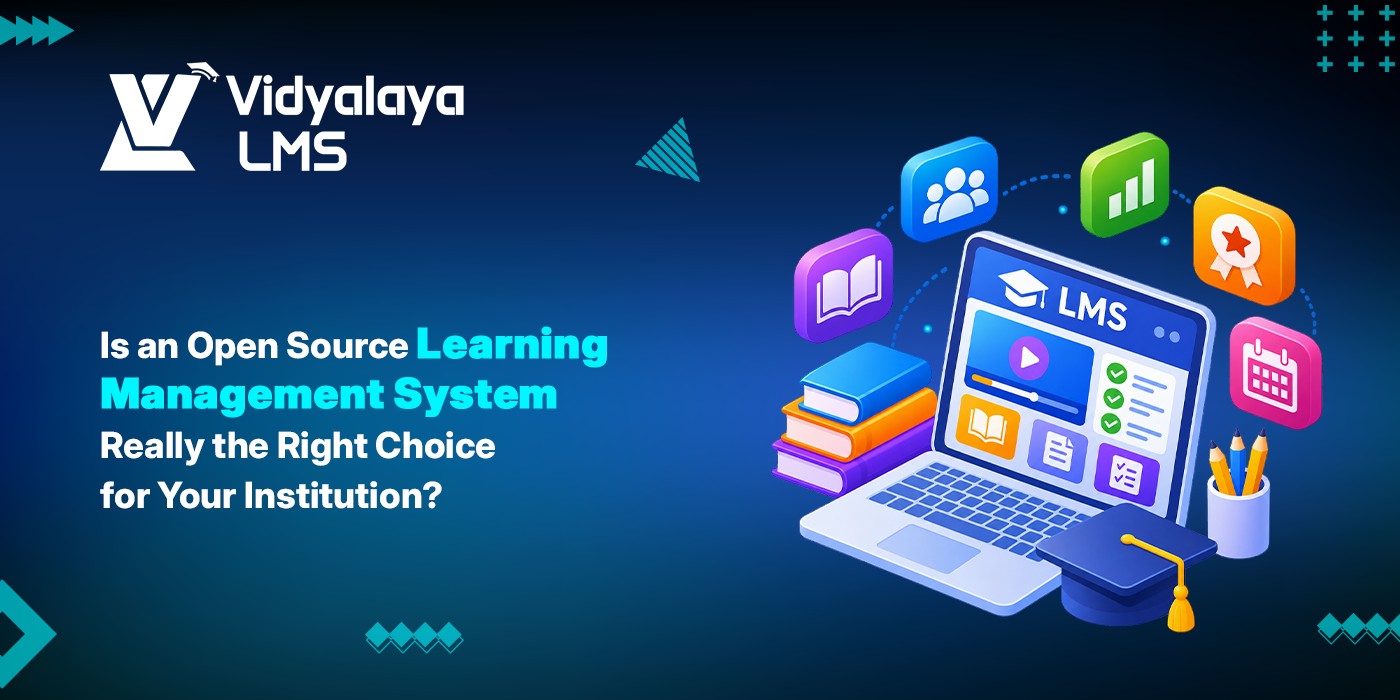
An Open Source Learning Management System (LMS) often appears to be a cost-effective solution for educational institutions looking to digitize their learning and training processes. With no upfront licensing fees, flexible customization options, and access to source code, it may seem like the ideal choice for colleges, universities, and schools operating on limited budgets. However, choosing an LMS based solely on its initial cost can lead to unexpected challenges. Beyond the software itself, institutions must also consider implementation, technical expertise, system maintenance, security updates, and long-term support to ensure smooth and uninterrupted operations.
Consider an institution that implements an open source LMS with the help of its in-house IT team. Initially, everything works as expected, but challenges may arise when key technical resources leave; plugins become incompatible after updates, or faculty members require assistance with grading and course management. What initially seemed like a free solution can gradually turn into a significant investment of time, resources, and operational costs. This doesn’t mean an open source LMS is the wrong choice; rather, it highlights the importance of evaluating the total cost of ownership, ongoing maintenance, technical support, and scalability before deciding. Ultimately, the right LMS is not simply the one with the lowest upfront cost, but the one that delivers long-term value and supports your institution’s evolving learning requirements.
Why Open Source Looks So Good on Paper?
The appeal is real, so let’s start there. With Open-Source LMS Software, you don’t pay a fee for every user. Your costs don’t jump when more students join. You also get the code. If your team can write code, they can change things to fit the way your institution works. You don’t have to wait for a vendor to add a feature.
That matters to some places. Think of a university with its own developers. Or a training institute that runs courses in an unusual way. A ready-made LMS Software product might force them to change their process. Open-Source Learning Management Software lets them change the tool instead.
You also decide where your data is located. That’s a big deal if your institution has strict rules about student data. Then there’s the community. Popular platforms have thousands of people working on them. You get forums, guides, and plenty of plugins. That helps a lot. But a forum is not a support contract. People mix the two up all the time.
What the Free Part Actually Covers
The license costs nothing. Most other things do. Here’s where the money and time usually go. Hosting comes first. Someone must run the servers, either in your office or in the cloud. Exams and deadlines bring a rush of users. If your setup is too small, the site slows down right when students need it most.
Then there’s security. Open source code gets fixed often, which is good. But your team must test each fix and install it. Miss a few and you’re running a system with known holes. And that system holds student records. Custom features cost you too. Every extra feature you add becomes your job to maintain. When the platform updates, your feature may break. Fixing it takes time.
And support. Say the platform goes down at 9 p.m. the night before the submission deadline. There’s no helpline to call. You’ve got an old forum thread and whoever is on your team.
Training is the last one, and people forget it. Open Source eLearning Software can be very powerful. It can also be harder to use than polished paid tools. A confusing screen means more training hours for your staff.
None of this is a dealbreaker. You just need to plan for it before you decide, not after.
Where Institutions Get This Wrong
The most common mistake is simple. People put “free” next to a paid quote and call it a comparison. A paid LMS Software package usually bundles hosting, updates, security and support into one price. With Open Source Learning Management Software, those costs show up separately. Some land with IT. Some land on a developer’s bill. Add them all up and the gap is smaller than you thought. Sometimes it’s gone.
Another mistake is changing too much, too soon. Teams get excited and ask for twenty tweaks in the first month. A year later, every update is a headache because each tweak needs testing. So, the team stops updating. And that brings the security problem right back.
The third mistake is thinking of open source means you can never be locked in. The code is open, yes. But say one developer built all your custom work on top of your Open Source LMS Software. You now depend on that person.
Conclusion:
The success of digital learning depends not only on the technology you choose but also on how effectively it supports your institution’s day-to-day academic operations. While an Open Source Online Learning Platform may offer flexibility and lower initial costs, factors such as system reliability, data security, technical support, ease of use, and future scalability play an equally important role. Before deciding, consider the bigger picture and invest in a solution that reduces operational complexity while creating a better learning environment for students, teachers, and administrators.
With Vidyalaya LMS, your institution can take a more structured approach to digital education with a platform designed to simplify learning management and support evolving academic needs. Make your LMS investment count by choosing a solution that helps you focus less on technical challenges and more on educational outcomes. Contact us today to book your FREE demo and explore how our LMS can support your institution’s digital learning journey.