





Building a future-ready workforce requires more than occasional training sessions—it demands continuous, accessible, and personalized learning. As organizations accelerate digital transformation and prioritize employee upskilling, traditional training methods are no longer sufficient to meet the evolving needs of today’s workforce. Employees have different learning styles, experience levels, job responsibilities, and schedules, making a one-size-fits-all training approach less effective. This is where Self-Paced Learning is transforming corporate training by enabling employees to access learning resources anytime, anywhere, and progress at a pace that suits their individual needs.
The growing adoption of remote and hybrid work models has further accelerated the demand for flexible learning solutions. Organizations are increasingly investing in Learning Management Systems (LMS) to deliver self-paced training that enhances employee engagement, improves knowledge retention, and minimizes disruptions to daily operations. By allowing employees to learn without compromising productivity, businesses can build a culture of continuous learning, develop future-ready talent, and maximize the impact of their corporate learning initiatives. As a result, self-paced learning is no longer just a modern training approach—it has become a strategic investment for organizations focused on long-term growth, workforce development, and business success.
What Is Self-Paced Learning?
Self-Paced Learning means a type of learning that provides the freedom to the learner to learn from the educational resources and enroll themselves in the courses according to their own convenience.
Unlike the fixed training programs, learners can:
- Learn anytime and anywhere
- Revisit topics when needed
- Progress at a comfortable pace
- Focus on areas that require improvement
- Balance learning with work responsibilities
This flexibility makes learning more accessible and effective for employees with different learning preferences.
Reasons for the Adoption of Self Paced Training in Companies:
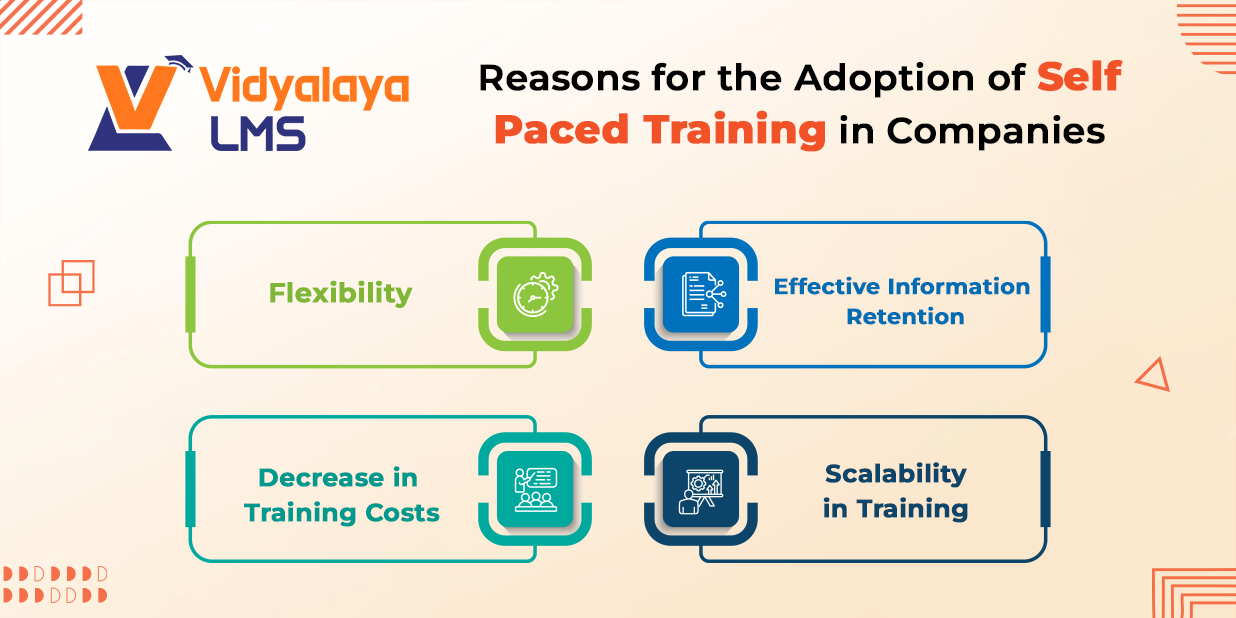
Companies have begun adopting Self Paced Training because there are many advantages associated with this method of training compared to conventional methods of training.
- Flexibility: Individuals can be trained without interfering with their work routine.
- Effective Information Retention: Individuals can review the same lesson several times to enhance retention.
- Decrease in Training Costs: Computerized training minimizes costs associated with transportation, venue rental, materials, and instructor-led training.
- Scalability in Training: Firms will be able to train people in various places without facing any difficulties.
Role of Corporate Learning Programs in Workforce Development:
Modern Corporate Learning Programs are designed to help employees continuously develop new skills and stay updated with industry trends.
Effective programs support:
- Professional development
- Leadership training
- Compliance education
- Technical skill enhancement
- Employee onboarding
When combined with self-paced learning models, these programs become more engaging and accessible for employees.
How Online Learning for Employees Improves Training Outcomes?
The growing popularity of Online Learning for Employees is driven by its ability to provide learning opportunities without geographical or scheduling limitations.
Benefits include:
- Anytime Access: Employees can access learning content whenever it is convenient for them.
- Consistent Learning Experience: All employees receive the same quality training regardless of location.
- Faster Skill Development: Employees can immediately apply newly acquired knowledge in their daily work.
- Improved Engagement: Interactive modules, videos, quizzes, and assessments make learning more engaging.
Importance of Personalized Learning Paths:
Every employee has different learning needs, career goals, and existing skill levels. This is why Personalized Learning Paths are becoming an essential feature of modern training platforms.
Personalized learning helps organizations:
- Address individual skill gaps
- Improve learner engagement
- Increase training effectiveness
- Support career development goals
- Deliver targeted learning experiences
Employees are more likely to complete training programs when content is relevant to their specific needs and objectives.
Challenges of Traditional Training Methods:
Traditional training approaches often present several limitations:
- Fixed training schedules
- Limited flexibility
- Higher operational costs
- Difficulty scaling across locations
- Inconsistent learner engagement
These challenges can reduce the effectiveness of employee development initiatives and limit organizational growth.
Why Self-Paced Learning Is the Future of Training?
In the future of workplace learning, flexibility, personalization, and access are the keys. Organizations realize that people learn better when they oversee how they learn.
Self-paced learning helps in continuous learning, facilitates lifetime learning, and makes it easier for businesses to respond to any changes in business needs. With increasing technological advancement, self-paced training would be smarter and more personalized.
Conclusion:
Self-Paced Learning is no longer just an alternative to traditional training—it has become a strategic approach for organizations looking to build an agile, skilled, and future-ready workforce. By offering employees the flexibility to learn at their own pace, businesses can improve knowledge retention, increase engagement, reduce training costs, and accelerate workforce development without affecting daily productivity. As organizations continue to embrace digital transformation, investing in a modern Learning Management System (LMS) is essential for delivering scalable, personalized, and impactful corporate training programs.
At Vidyalaya LMS, we empower organizations with a comprehensive Learning Management System designed to simplify corporate training, employee onboarding, compliance learning, and continuous upskilling. Whether you’re looking to enhance employee performance or build a culture of continuous learning, our LMS provides the flexibility and tools your business needs to succeed. Ready to transform your corporate training strategy? Contact Vidyalaya LMS today for a free demo and discover how our LMS can help your organization create a future-ready workforce.