





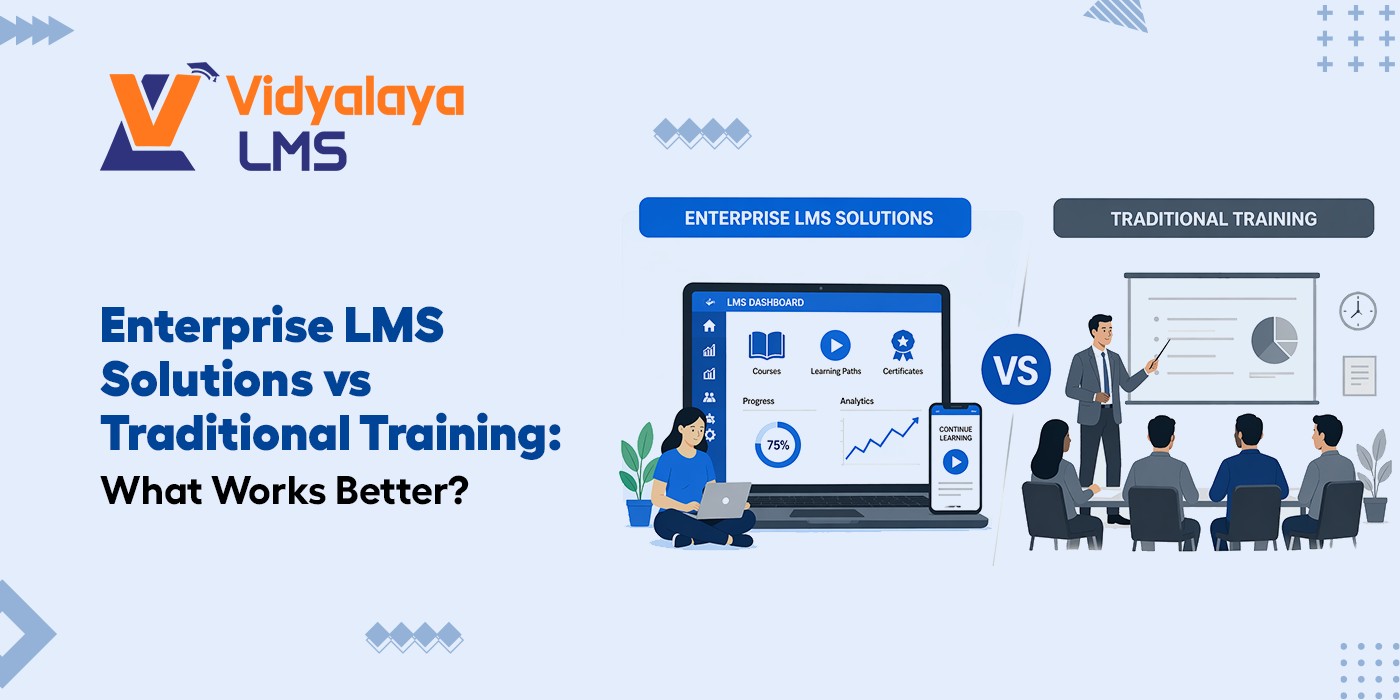
The ongoing need to improve all employees through either training or skills upgrading in an efficient manner is an obstacle facing numerous organizations in today’s ever-evolving business climate. Companies continue to weigh the pros and cons of using traditional versus digital training techniques. Even though classroom-based training has always been a benchmark for corporate education delivery in past years, digital transformation will have a drastic impact on how businesses consider providing their employees with educational opportunities.
Which method of training to utilize can greatly affect an organization’s overall success by affecting the levels of employee productivity, engagement, and the ability to grow as a business.
In this article, we will compare Enterprise LMS with more traditional approaches to training and development to determine which is more effective in today’s business environment. In addition, we will also help explain why Learning Management System solutions are becoming the solution of choice for organizations today.
Did you know? Current research indicates that organizations have reported an average reduction in training costs of approximately 40% and an increase in productivity of approximately 25% by adopting a Corporate Learning Management System.
What is Enterprise LMS Solutions?
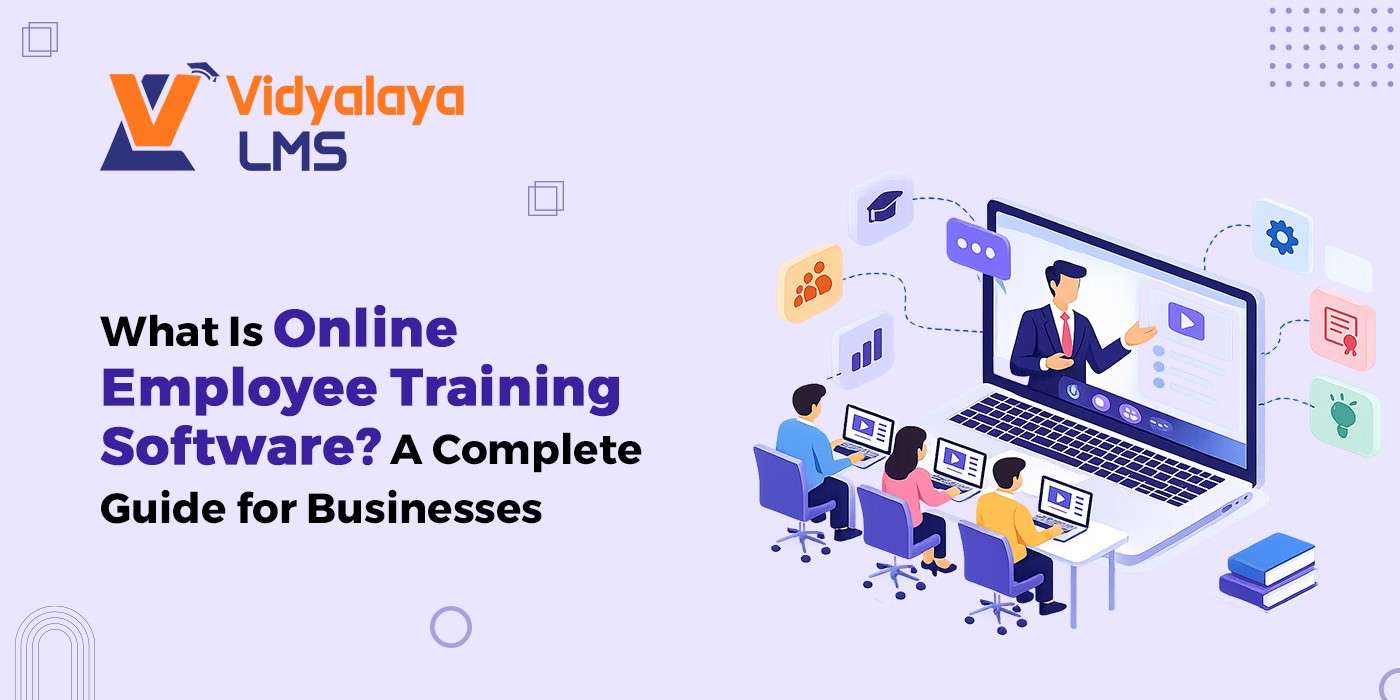
It offers businesses the tools they need to create, manage, and deliver employee training. They are the future of Enterprise Learning Management Software, allowing businesses to deliver structured learning experiences for employees through online modules, videos, assessments, and certifications.
It is not simply a content delivery tool, but an entire ecosystem that supports onboarding, compliance, developing skills, and tracking performance. Today’s LMS platforms for Enterprise Training are also integrated with HR systems, resulting in more personalized and data-driven learning experiences.
What is Traditional Training?
Traditional approaches to training have included instruction using physical items (paper), instructor-led courses, workshops, classrooms, etc. Traditional methods use many scheduled sessions and physical presence as their primary sources.
Although traditional training has worked well for many years, it is limited in many ways due to high costs and limited time, as well as its inability to accommodate large volumes (scalability issues) of learners (the opposite of an LMS). Like an LMS, traditional training does not provide analytics or real-time tracking of ongoing performance or overall effectiveness.
Key Differences Between LMS and Traditional Training:
- Accessing Training: Allows for 24/7 access to training from any location. Traditional training requires you to be at a specific location at a specific time.
- Cost of Delivery: With Corporate LMS, you save money on travel, venue, and instructor expenses, while traditional methods can be quite costly.
- Number of Employees Being Trained: Enterprise Learning Systems allow for the training of many employees at one time, unlike traditional classroom training.
- Data About Learners: LMS has detailed reports on learner progress as opposed to a traditional method of training.
- Ways to Keep Learners Interested: Recent Enterprise LMS Solutions include gamifying the training process, giving quizzes, and using multimedia to helpfully engage learners.
Benefits of Enterprise Learning Systems:
An enterprise-level Learning Management System is improving the quality of training programs and providing organizations with an environment to better align their employee training to their company’s overall business goals.
The greatest benefit of an Enterprise LMS is the ability for employees to access training programs and modules when they have the time, allowing employees to retain knowledge. Another important benefit of an LMS is that it helps to standardize training across multiple offices and teams.
Automation is another key benefit provided by an Enterprise LMS. Automating tasks such as assigning training courses and generating performance reports significantly reduces the amount of manual effort required. HR professionals also benefit, as it’s easy for them to track employee compliance training and certification with an LMS.
Some of the key benefits of using an Enterprise LMS are:
- A single, centralized platform for employee training
- Real-time tracking of training progress and completion rates
- Personalized learning paths by artificial intelligence
- More rapid onboarding and development of skills
- Lower overall operating costs.
Limitations of Traditional Training:
Although traditional training offers great benefits, it doesn’t provide enough flexibility or speed to meet the demands of modern business today.
One of the most significant challenges with coordinating training for different locations is that this typically requires someone to organize the logistics behind the full training curriculum. On the other hand, delivering training to all locations would be instantaneous via a Corporate LMS.
Additionally, many traditional training delivery methods have no measurable outcomes. Without the analytics that can be obtained through an Enterprise Learning System, it will be nearly impossible to determine whether employees received the training and understood what they have been taught.
Common disadvantages of traditional training (in addition to the above) include:
- High travel and facility costs
- Limited scalability
- Fixed schedules that may not accommodate all employees
- Little or no data or performance tracking
Which One Works Better for Modern Businesses?
Whether or not a company should use a Corporate Learning Management System (LMS) or another form of corporate training depends on its unique business requirements and organizational goals. That said, you shouldn’t assume that traditional training is no longer a viable option. Many businesses find it most effective to use a mix of both types of training – for example, using an instructor-led classroom session for hands-on learning with an Enterprise LMS for theory-based learning and compliance training.
Many industries (particularly in the realms of Information Technology, Healthcare, Education, and Manufacturing) have been rapidly adopting Enterprise Learning Systems to remain competitive. As remote and hybrid work arrangements become more common, demand for LMS for Corporate Training will only continue to grow.
Conclusion:
The way organizations build skills today is directly shaping how fast they can adapt, grow, and compete in an increasingly digital-first world. Traditional training methods, while still useful in certain situations, often struggle to keep pace with modern workforce demands such as flexibility, scalability, and measurable outcomes. In contrast, Enterprise LMS solutions bring structure, automation, and real-time insights that make employee training more consistent, engaging, and aligned with business goals.
For companies aiming to future-proof their workforce, adopting an LMS is becoming less of a choice and more of a strategic move toward efficiency and growth. Vidyalaya LMS enables organizations to simplify training management, improve learning adoption, and reduce overall training costs while ensuring better performance tracking. Contact us for a free demo to explore how Vidyalaya LMS can upgrade your corporate training strategy.