



Microlearning Platform: What It Is, How It Works & Why Businesses Need One

Vidyalya LMS

Traditional employee training often involves lengthy sessions that struggle to maintain learners’ attention and ensure long-term knowledge retention. For businesses, this can lead to reduced training effectiveness, lower employee engagement, and valuable time lost from daily operations. As organizations look for more efficient ways to upskill employees, improve compliance training, and support continuous learning, Microlearning Platforms are emerging as a practical solution for delivering focused, bite-sized learning experiences that fit seamlessly into busy work schedules.

It enables businesses to deliver short, targeted learning modules that help employees absorb, retain, and apply knowledge more effectively. By breaking complex topics into manageable lessons, organizations can make corporate training more flexible, accessible, and engaging across teams and departments. With features such as mobile learning, progress tracking, assessments, and personalized learning paths, a microlearning platform helps streamline employee training, support workforce development, and align learning initiatives with business goals. In this blog, we’ll explore what a microlearning platform is, how it works, and why businesses need one to build a more agile and skilled workforce.

Why Long-Format Training Never Really Worked?

Traditional corporate training runs on the assumption that more time in the room equals more learning. It doesn’t. Attention drops sharply after the first fifteen to twenty minutes of any session, and what’s covered in the back half of a two-hour module mostly evaporates within days — a problem training departments have quietly lived with for years because the alternative, breaking everything into smaller pieces, used to be a scheduling nightmare.

The real cost isn’t the wasted hour and a half. It’s that employees start treating training as something to get through, not something to use. A compliance module becomes a checkbox. A product training becomes background noise while someone answers emails. Nobody’s being lazy — the format itself is working against retention from the start.

How a Microlearning Platform Actually Works?

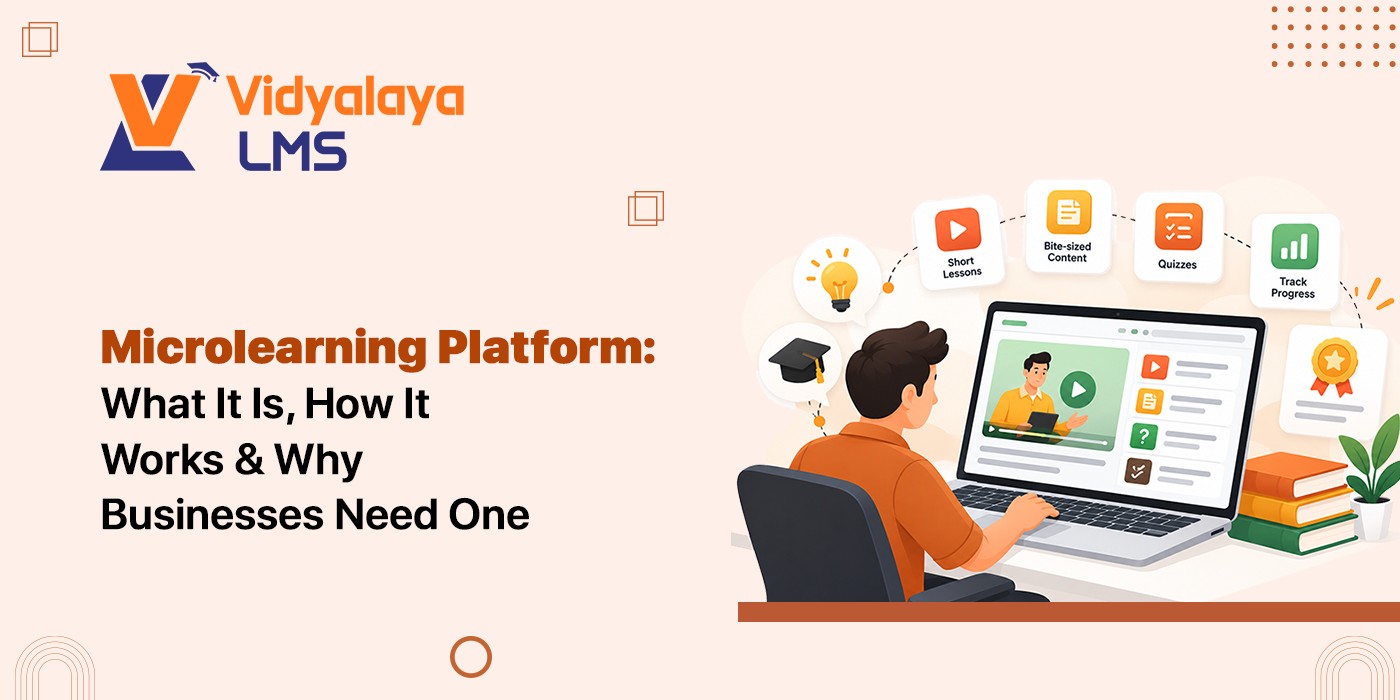
Content broken into single-concept units, not shortened versions of long courses. The mistake a lot of companies make is just chopping an existing two-hour deck into twelve ten-minute slices. Real Microlearning isn’t a smaller portion of the same meal — each unit is built around one idea a person can absorb and apply immediately, not a fragment of something bigger.

A good Microlearning Online Platform doesn’t dump twenty modules on someone at once and hope they get through them. It spaces delivery out — a module today, a related one in three days, a refresher two weeks later — which lines up with how memory consolidates, instead of how a training calendar happens to be laid out. Access on whatever device someone already has open. Most employees aren’t sitting at a desktop when they need a quick answer — they’re on a shop floor, between meetings, or checking a phone during a commute. Microlearning Software built for that reality lives on mobile as naturally as it does on desktop, because a five-minute module that only works on a laptop defeats half the point.

Where Businesses Get This Wrong

The most common mistake is treating microlearning as a cost-cutting shortcut rather than a retention strategy. Chopping an existing training deck into bite-sized slides without rethinking the structure doesn’t improve retention — it just makes a bad format shorter. The content still needs to be rebuilt around single, focused concepts, not merely trimmed.

The second mistake is rolling it out without any spacing or reinforcement. Sending someone ten five-minute modules back-to-back on a single afternoon recreates the same fatigue problem microlearning was supposed to solve. The spacing between sessions is doing as much work as the content itself — skip it, and you’re left with a shorter version of the same ineffective marathon.

The third mistake is picking a standalone tool that doesn’t talk to the company’s existing LMS. A microlearning platform that tracks completion in its own silo, disconnected from compliance records or skill matrices HR already relies on, just creates a second system someone has to manually reconcile with the first — which, for any team managing more than a handful of employees, becomes its own quiet burden.

Conclusion:

A microlearning platform is more than just a modern training tool; it is a strategic investment in employee development, knowledge retention, and overall business performance. By delivering focused, bite-sized learning experiences, businesses can improve employee engagement, simplify corporate training, reinforce critical knowledge, and support continuous skill development without disrupting daily operations. Choosing the right microlearning software that integrates with your existing Learning Management System (LMS) can further streamline training management, track learning progress, and align employee learning initiatives with organizational goals.

With LMS Software, businesses can take a more flexible and effective approach to employee training through technology-driven learning solutions. Whether your goal is to enhance compliance training, accelerate employee onboarding, or build a culture of continuous learning, the right LMS can help you create a more skilled and productive workforce. Contact Vidyalaya LMS today to book your free demo and discover how our LMS solution can support your corporate training needs and drive better learning outcomes.

Frequently Asked Questions

1. What are the key benefits of microlearning for businesses?

Microlearning helps businesses improve employee engagement, reinforce knowledge retention, and reduce training-related downtime. It also supports faster onboarding, continuous skill development, and more flexible corporate training.

2. How can microlearning improve employee training outcomes?

By delivering focused lessons in short sessions, microlearning makes it easier for employees to understand and apply new information. Regular assessments and knowledge refreshers can further reinforce learning and improve training effectiveness.

3. What features should businesses look for in microlearning software?

Businesses should look for mobile accessibility, interactive content, quizzes and assessments, progress tracking, personalized learning paths, reporting dashboards, and integration with their existing Learning Management System (LMS).

4. Can microlearning be integrated with an existing LMS?

Yes, depending on platform compatibility and available integrations, microlearning content can be incorporated into an existing LMS. This helps organizations centralize learning activities, monitor employee progress, and manage training records efficiently.

5. How does microlearning support employee onboarding?

Microlearning simplifies onboarding by breaking company policies, job responsibilities, product knowledge, and operational procedures into manageable lessons. New employees can learn at their own pace while accessing relevant information when needed.

6. Is microlearning suitable for compliance and mandatory training?

Yes, microlearning can reinforce compliance requirements through short lessons, scenario-based activities, and regular knowledge checks. Businesses should ensure that their training approach also meets applicable regulatory requirements and documentation standards.

7. How can Vidyalaya LMS help businesses improve corporate training?

Vidyalaya LMS provides a Learning Management System designed to help organizations manage digital learning and streamline training administration. Businesses can explore its available features to support employee development and monitor learning progress.

8. How can businesses explore Vidyalaya LMS for their training needs?

Businesses can contact Vidyalaya LMS to book a free demo and discover how its LMS solution aligns with their corporate training objectives. A personalized demonstration can help decisionmakers evaluate relevant features and identify suitable learning management capabilities.

author

The Author

Kumaril Patel

CEO & Co-Founder

LinkedIn Icon

Kumaril Patel is the CEO & Co-Founder of Sapphire Software Solutions, a global technology company specializing in software, mobile app, and web development. With over 20 years of diverse IT leadership, he has built international business operations from the ground up and led the leading flagship digital platforms such as Vidyalaya School Management System and OccuCare Occupational Health Management System.

Kumaril is known for transforming ideas into high-impact technology solutions—leading cross-functional global teams and building innovation-driven ecosystems. His strategic vision has enabled long-standing collaborations with global enterprises including American Express, Bayer, TATA Group, Adani Group, Larsen & Toubro, Honda, Toyota and Vedanta Limited.

Passionate about innovation, AI, and cloud technologies, Kumaril focuses on empowering organizations to scale globally while solving real-world challenges through transformative digital solutions.

Related Blog

sapphire
December 30, 2025 5 min read
Organizations and educational institutions increasingly depend on remote learning and e-learning to support a geographically distributed workforce and student base. As teams and learners operate from multiple locations, traditional methods of measuring productivity and training effectiveness have evolved. However, simply shifting existing training programs to an online format does not automatically lead to improved performance or engagement. Productivity gains are achieved only when remote learning is delivered through a well-structured, goal-oriented Learning Management System (LMS) designed to support efficient skill development and measurable outcomes. A Learning Management Software serves as a centralized platform for delivering, managing, and tracking online educational […]
Read More Vidyalaya LMS
sapphire
September 17, 2026 4 min read
Managing employee training becomes increasingly complex as businesses grow, teams become distributed, and training requirements vary across roles and departments. Traditional classroom sessions, spreadsheets, and manual follow-ups can make it difficult to deliver consistent training and track employee progress. Online Employee Training Software gives businesses a centralized platform to manage onboarding, skill development, compliance training, assessments, and employee learning in one place, while supporting an efficient staff training management system. With a digital training platform, employees can access courses and learning materials anytime through an online training portal for employees, while HR teams and managers can assign training, monitor completion, […]
Read More Vidyalaya LMS
sapphire
September 23, 2026 5 min read
Consider the amount of knowledge generated by an educational institution daily – lesson plans, recorded classes, study materials, tests, training materials, notifications, and so on. Now, imagine wanting to find specific academic materials after months have passed since they were supposedly issued – however, they are dispersed in various emails, folders, communicating applications, and devices. This is where an LMS knowledge platform that integrates all the academic materials into one system comes into play. A modern LMS is not just a platform for course uploads or online testing anymore. By strategically using information management technology at your LMS, you can […]
Read More Vidyalaya LMS
Success Icon