







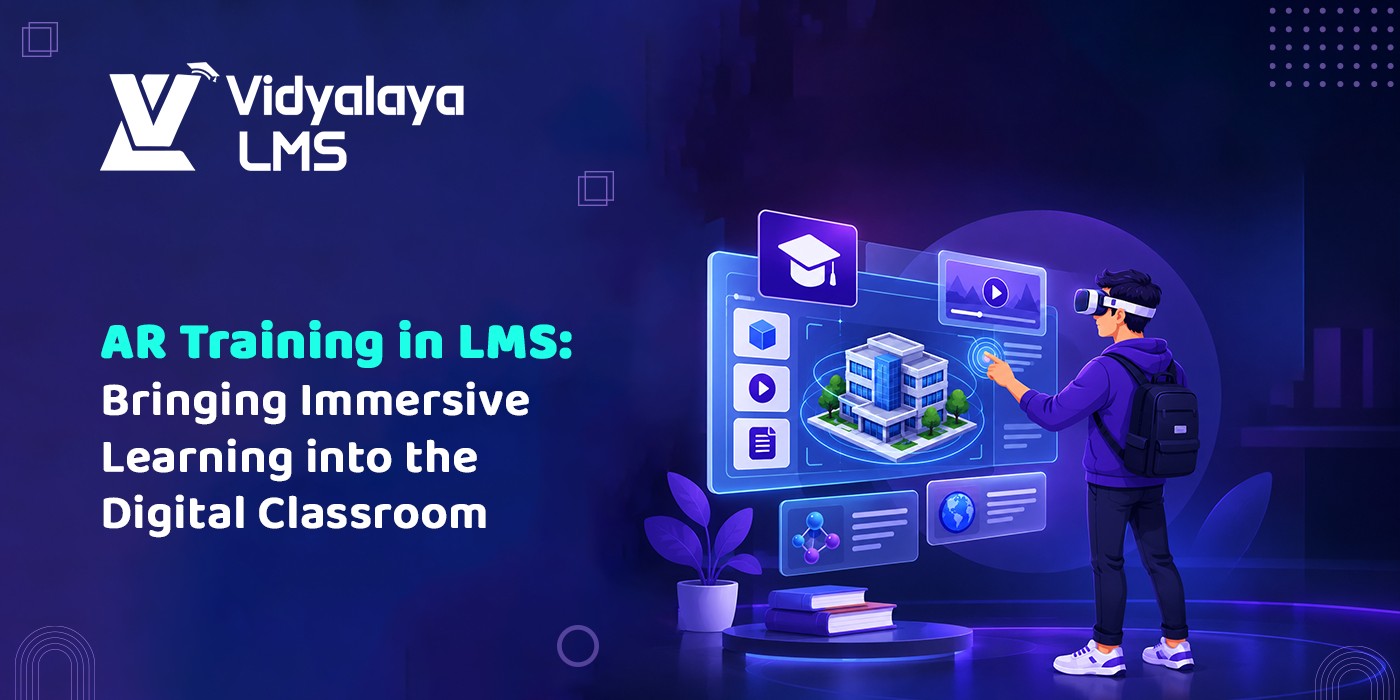
Traditional online training methods, such as static presentations, PDFs, and pre-recorded videos, often struggle to maintain learner engagement and ensure long-term knowledge of retention. Augmented Reality (AR) training in a Learning Management System (LMS) offers a more interactive and practical approach by combining digital learning content with real-world environments. This innovative technology enables learners to visualize complex concepts, explore equipment, and practice essential skills through immersive, hands-on experiences within a digital learning environment.
For example, in manufacturing, AR-powered LMS training allows technicians to interact with real machinery through guided visual instructions, identify critical components, and practice operational procedures in a controlled learning environment. By integrating AR technology into an LMS, organizations can deliver engaging, experiential learning experiences that improve knowledge retention, support skill development, and reduce reliance on traditional training methods. As businesses increasingly prioritize workforce upskilling and digital transformation, AR training in LMS platforms is emerging as a valuable solution for creating more effective, scalable, and learner-centric digital classrooms.
So, what does AR training in LMS actually look like?
Simple. You open a course, tap a module, and aim at your phone at a desk or a machine. A 3D engine appears that you can walk around, or repair steps to hover beside the real part. When you finish, your score drops into the LMS like any other course.
The LMS bit is the part people skip, and it’s the part that matters. A standalone AR app is fun for ten minutes, then nobody can say who used it or whether it helped. With AR training in LMS, trainers get completion data and scores in the reports they already check.
Why AR/VR in LMS keeps coming up
Some things only click when you see them. Explain a heart valve in words and you’ll need paragraphs. Let someone turn it in their hands, and it takes seconds.
Then there’s the freedom to fail. In an AR training program for nurses or machine operators, you can make the same mistake ten times with zero consequences, which is basically how skills get built.
Attention is the quieter benefit. A lesson that responds to you is much harder to tune out.
And the gear is cheap, because most AR runs on a phone people already own. Full VR usually means headsets, so plenty of teams start with AR and bring in AR/VR in LMS more broadly later. VR swaps your surroundings for a made-up world, while AR adds to the real one. For hands-on jobs, I’d pick AR first.
What the numbers could look like
Here’s an illustration of how formats might compare on an end-of-course test:
Illustrative example: average assessment score by training format
Average score (%) by Training format
| Training format | Average score |
| Reading only | 62 |
| Video lessons | 70 |
| Simulation | 78 |
| AR training | 85 |
Use the arrow keys to move between data points
These numbers are placeholders. Replace them with your own pilot data or a cited study before publishing.
The pattern is the point: the more hands-on the format, the more people tend to remember.
Where AR learning classes work, and where they don’t
Anything physical or visual: anatomy, machine repair, safety drills, product demos, science labs. If your instinct is “let me just show you,” AR fits. A policy document? Leave it as a PDF. Not everything needs a camera and a tablet, and AR learning classes work best when they’re used selectively.
Starting an AR training program
Choose a single skill that is difficult to teach on paper. Make sure that your LMS supports SCORM or xAPI for results tracking. Make it mobile friendly, limit each session to five-ten minutes, and start with a small group to determine the possible problems.
One of the most popular errors is attempting to create from scratch. A rough five-minute demo session conducted with real learners can easily deliver better results than a perfect learning module that has never been tried.
Conclusion:
Augmented Reality (AR) training in an LMS is more than an emerging educational trend; it is a strategic investment in employee training, learner engagement, and workforce development. By combining immersive learning experiences with centralized course management, assessment, and performance tracking, organizations can make training more interactive, practical, and measurable. With the right LMS solution, businesses can deliver scalable learning experiences that align with their training objectives, support skill development, and prepare their workforce for real-world challenges.
At Vidyalaya LMS, we help organizations embrace modern digital learning approaches with a robust Learning Management System designed to streamline training delivery and enhance the learning experience. If you are looking to make your training programs more engaging, flexible, and effective, explore how Vidyalaya LMS can support your organization’s learning and development goals. Contact us today for a free demo and discover how our LMS can help transform your digital training strategy.