







Employee training is one of the most significant investments an organization can make. Trained employees lead to an increase in productivity, innovation, and customer satisfaction. However, managing employee training manually can be difficult, especially for a large group of employees.
A Learning Management System helps companies simplify the entire learning process by offering a single platform for companies to develop, manage, and track learning content, as well as employee performance. The following blog discusses the impact of new-age Learning Management Platforms on employee training.
What Is an LMS Learning Management System?
An LMS, or Learning Management System, is software that can manage, deliver, and track training programs. It can help organizations develop training programs and give employees access to training materials at any time and in any location.
A Learning Management Software is a software that can include the following:
- Creating courses and managing content
- Online quizzes and assessments
- Progress tracking and analytics
- Certification and compliance tracking
- User tracking and reporting
By integrating these tools, a Learning Management Platform can help organizations manage training programs.
Why Organizations Need Modern Employee Training Software?
As the nature of work changes, the need for learning among employees is also expected to change with new technologies, processes, and industry standards. The conventional classroom training method may not be flexible or easily accessible.
A contemporary Employee Training Software enables organizations to:
- Offer training to employees in various locations
- Deliver learning content on demand
- Monitor the development of skills among employees
- Lower training expenses and administrative burden
- Ensure a common body of knowledge among teams
The benefits of using Employee Training Software make it a necessity for organizations that aspire to be competitive and innovative.
Key Benefits of Using a Learning Management Platform:
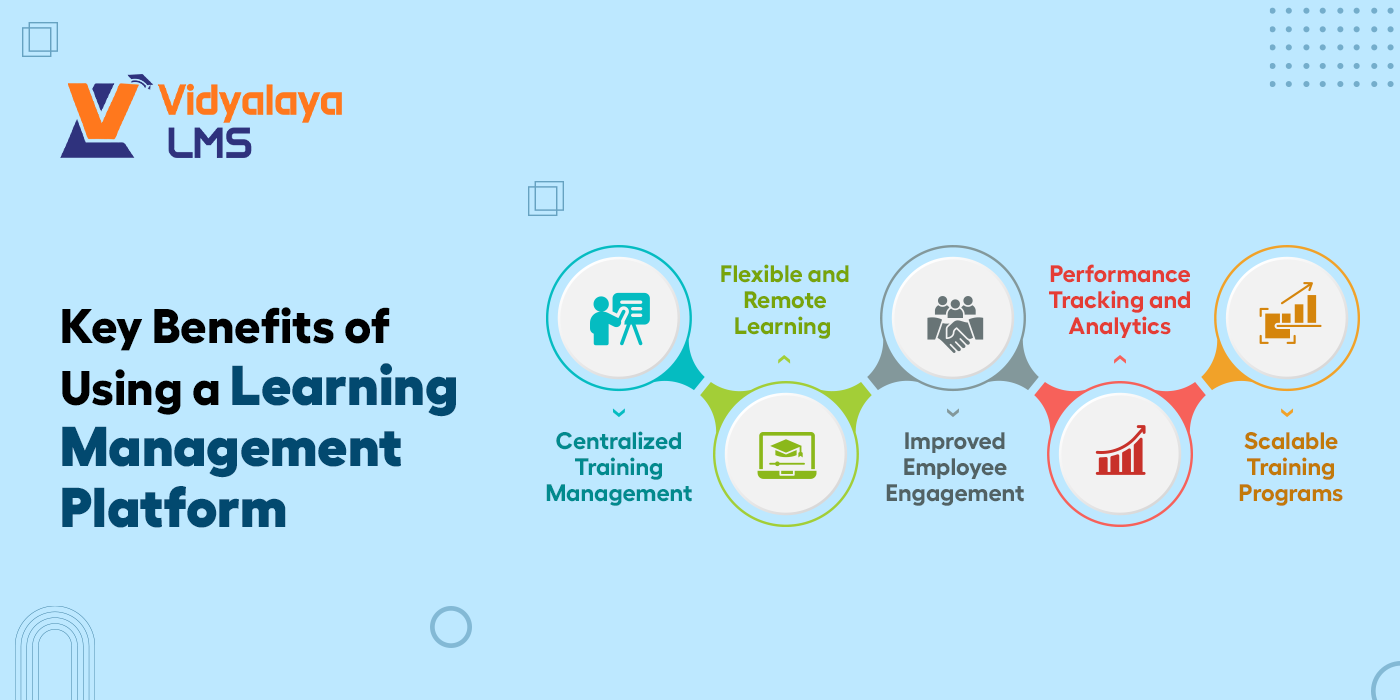
1. Centralized Training Management:
A Learning Management Platform allows administrators to store training resources in one location, enabling easy administration and monitoring of employee training and engagement.
2. Flexible and Remote Learning:
Employees can access training materials at their convenience, allowing them to learn at their own pace without affecting their work schedule.
3. Improved Employee Engagement:
Use of training materials such as videos, quizzes, and tests helps in improving employee engagement and knowledge retention.
4. Performance Tracking and Analytics:
A modern-day Learning Management System offers detailed performance tracking and analytics, enabling organizations to measure training performance.
5. Scalable Training Programs:
As organizations expand, their training needs increase. A Learning Management Software allows organizations to expand their training programs while keeping administration simple.
Impact of LMS on Employee Productivity:
The organizations that implement a structured digital learning platform experience improvements in the performance of employees. The employee training software ensures that the employees are updated on the latest skills and industry practices through training programs conducted on the Learning Management Platform.
The employees who undergo continuous training through the employee training management systems are more confident, productive, and motivated. This not only increases individual performance but also organizational growth.
Future of Employee Training with Digital Learning Systems:
The future of employee training is digital and data-driven. Organizations are moving towards cloud-based training systems that provide easy access and real-time monitoring, as well as large-scale learning opportunities.
Modern learning management software supports a blended learning model that includes online training, virtual training sessions, and interactive assessments. Digital learning systems will have an even greater impact on shaping the future workforce as advanced technologies advance.
Conclusion:
Organizations that invest in structured digital learning create a measurable advantage—faster onboarding, consistent skill development, and a workforce that is aligned with evolving business goals. A well-implemented Learning Management System does more than deliver content; it builds a culture of continuous improvement, where employees can upskill at their own pace while managers gain clear visibility into learning progress and outcomes. This shift from traditional training to a technology-driven approach directly contributes to better performance, higher retention, and stronger organizational agility.
With a solution like Vidyalaya LMS, businesses can simplify training management while ensuring learning remains engaging, trackable, and scalable. Whether your goal is to train a growing team, maintain compliance, or boost productivity, the right LMS becomes a long-term asset for growth. Contact us for a free demo today and see how Vidyalaya LMS can transform your employee training into a powerful driver of success.