




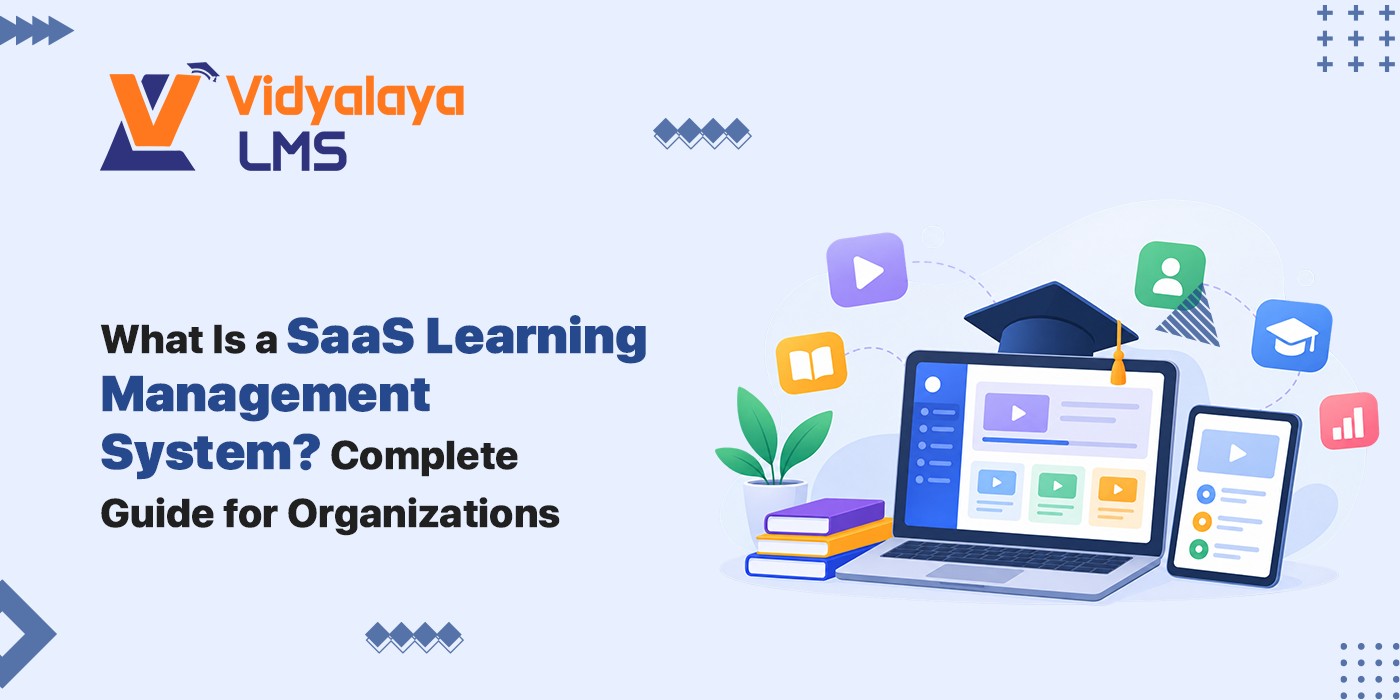
A SaaS Learning Management System (LMS) is a cloud-based platform that helps organizations manage, deliver, track, and evaluate employee training from a centralized system. Traditional approaches—such as storing training materials in shared drives, maintaining completion records in spreadsheets, or relying on manual follow-ups—can quickly become difficult to manage as an organization grows. A SaaS LMS streamlines these processes by bringing courses, learning resources, assessments, employee progress, certifications, and training records together in one accessible platform.
For HR, Learning & Development, and organizational leaders, a SaaS LMS goes beyond simply delivering online training. It provides a structured way to standardize learning, monitor employee engagement, automate administrative tasks, and maintain accurate training records for compliance and reporting. By moving training management to a cloud-based LMS, organizations can improve operational efficiency, deliver consistent learning experiences, and gain actionable insights into workforce development—making SaaS LMS solutions an increasingly valuable part of modern employee training and organizational growth.
What “SaaS LMS” Actually Means
The SaaS part matters more than it sounds. A traditional LMS meant installing software on company servers, maintaining it, and upgrading it manually every time something changed. A SaaS LMS runs entirely in the vendor’s cloud — an organization logs in, uses it, and the provider handles hosting, updates, and security in the background.
In practice, this is the difference between IT provisioning a server for six weeks before training can even start, and an HR team creating an account and uploading its first course the same afternoon. That’s the whole appeal of a Cloud Learning Management System: the infrastructure problem stops being the organization’s problem.
What It Actually Does
Strip away the marketing language and a SaaS LMS handles a specific set of jobs.
Delivers training content in one place: Instead of PDFs scattered across email threads and drives, an Online Learning Management System hosts courses, videos, quizzes, and reading material in a structured path employees or learners move through — with a system, not a person, tracking who’s were.
Tracks completion and compliance automatically: For anything regulatory — safety training, code-of-conduct refreshers, certification renewals — an LMS SaaS Platform logs who completed what and when, producing a real audit trail instead of someone’s memory of sending a reminder email.
Scales without extra headcount: Training 50 employees and training 5,000 shouldn’t require proportionally more admin staff. A properly built Enterprise LMS handles that scale through automation — assigning courses by role or department, sending reminders, generating reports — without a training coordinator manually managing each person’s progress.
Adapts to different audiences from one system: A single deployment can serve very different needs: onboarding for new hires, compliance training for existing staff, and skill-building for a leadership track, all inside the same Corporate Learning Platform rather than three separate tools that don’t talk to each other.
Who Actually Uses This, and Why the Fit Differs
A school running an LMS for students and a company running one for employees are solving related but different problems, and it’s worth not conflating them.
For businesses, the driver is usually Employee Training Software that reduces the manual burden of onboarding and compliance — HR doesn’t want to individually track forty new hires’ progress through the same six mandatory modules. For larger organizations, it’s less about basic delivery and more about consistency across departments and geographies, which is where the “enterprise” label earns its place — role-based content, integration with HR systems, reporting granular enough for leadership to use.
Smaller organizations often get more relative value from a SaaS LMS than large ones expect, precisely because they don’t have a dedicated L&D team to absorb the manual tracking work in the first place.
What Organizations Get Wrong When Choosing One
The most common mistake is picking a SaaS Learning Management System based on the feature list without checking whether it integrates with what already exists — the HR system, the employee directory, single sign-on. A platform that can’t sync with existing records turns into one more manual data-entry task rather than removing one.
The second mistake is treating content and platform as one purchase. A Cloud Learning Management System is infrastructure — it doesn’t come with good training content built in. Organizations that assume otherwise end up with an empty, well-organized shell and no material worth putting in it.
The third is under-scoping for growth. A system that works fine for 100 employees can strain at 1,000 if it wasn’t built with that scale in mind, which is usually where the gap between a basic tool and a genuine Enterprise LMS becomes obvious.
Where This Is Heading
The next stretch of development isn’t about adding more content formats — most platforms already handle video, quizzes, and documents fine. It’s about the system doing more of the deciding: recommending the next module based on a role change, flagging which employees are falling behind on mandatory compliance training before a deadline rather than after, and adjusting a learning path based on how someone’s actually performing rather than a fixed schedule everyone follows regardless of pace.
Organizations that get the most out of a SaaS LMS tend to start with one clear use case — usually compliance or onboarding — prove it reduces the manual tracking burden and expand into broader corporate learning from there.
Conclusion:
A SaaS Learning Management System can transform how organizations manage employee training by bringing learning, automation, compliance tracking, reporting, and performance management into one centralized platform. Instead of relying on spreadsheets, emails, and manual follow-ups, businesses can create a structured and scalable learning environment that supports employee onboarding, compliance training, skill development, and continuous professional growth. The right LMS should go beyond a list of features—it should align with your organization’s training objectives, integrate seamlessly with existing processes, scale as your workforce grows, and deliver measurable value to HR and L&D teams.
With Vidyalaya LMS, organizations can simplify training management, streamline learning processes, monitor learner progress, and create a more engaging and effective digital learning experience. Whether you are looking to improve employee onboarding, manage compliance training, develop workforce skills, or build a centralized corporate learning environment, Vidyalaya LMS provides a scalable LMS solution designed to support your goals. Contact us today for a free demo and discover how Vidyalaya LMS can help transform the way your organization delivers and manages learning.