







Every company these days talks about training as if it’s the magic button that will fix everything—performance issues, skill gaps, team communication; you name it. And honestly, training is important. But the real question people keep pushing under the rug is: “Is all this money we’re spending actually doing anything?”
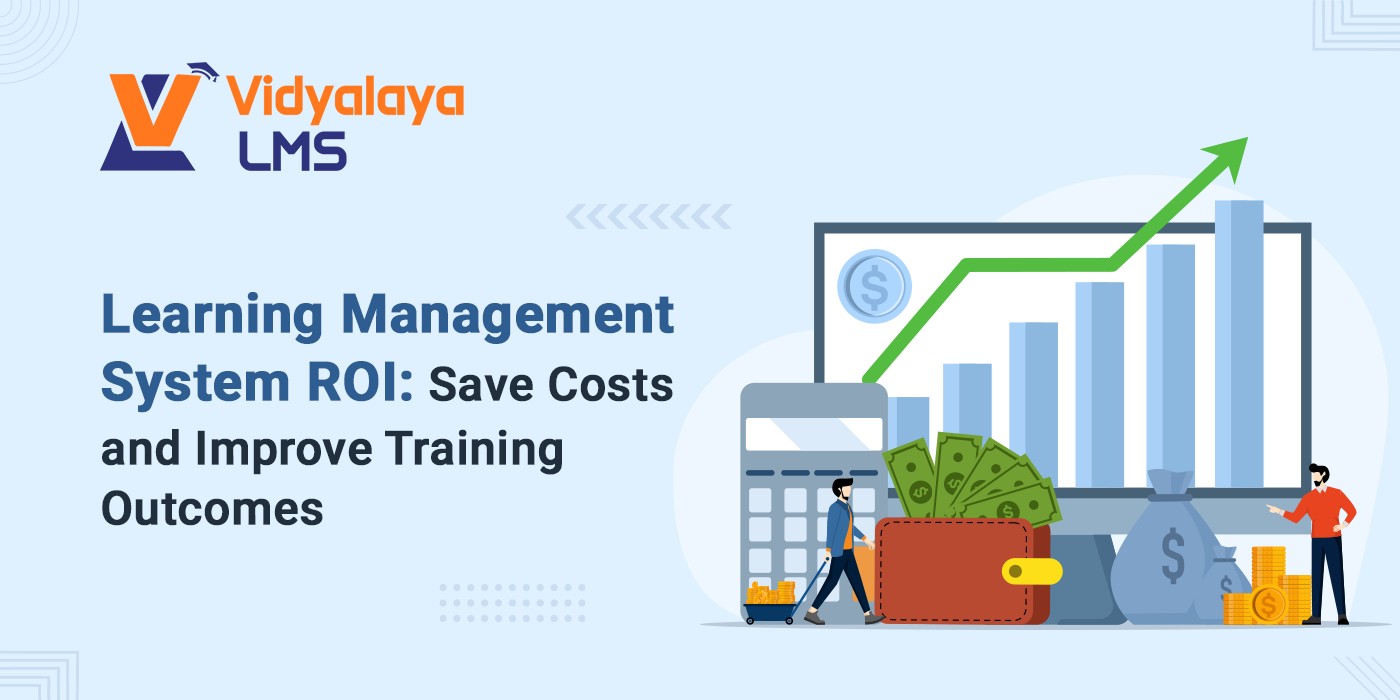
That’s where conversations around LMS ROI suddenly become interesting. Once companies start using LMS Software, they realize training isn’t just a bunch of sessions or slides—there’s a whole structure behind it that can be measured straightforwardly.
Let’s Break into the Topic First
If you’ve ever sat through a long, slightly boring training session, you know exactly why digital learning systems exist. Traditional training is exhausting—for trainers, managers, and, honestly, for employees too. So, when organizations started shifting toward online learning, it wasn’t just because it was trendy. It was because it solved a lot of annoying problems.
LMS Software basically turns training into something more predictable and easier to manage. You don’t have to chase people for attendance. You don’t have to repeat the same onboarding talk ten times. You don’t have to guess whether anyone even remembers what you said. Everything sits neatly inside a digital platform.
And once this shift happened, companies naturally started asking: “Okay… so is this saving us money? Is this improving anything at all?”
That’s how LMS cost-benefit analysis became a hot topic.
Why LMS Platforms Became So Popular?
I’ve spoken to HR teams and L&D managers who swear they used to spend half their day organizing training materials in folders they later lost. Some even had spreadsheets named “Final version (really final this time).xlsx.” We have all been there. Corporate Training Software became popular—it brought sanity into a process that was always messy.
A few things pushed LMS platforms into the spotlight:
- More hybrid teams = fewer ways to train in person
- Skills keep changing faster than job titles
- Employees want to learn without feeling forced
- Managers want proof that training isn’t just a checkbox activity
And honestly, once companies started using these systems, they realized the importance wasn’t just inconvenient. It was in numbers. Training suddenly had data behind it—completion rates, time spent, performance outcomes… all that good stuff that makes executives happy.
Now, Why Does Any of This Really Matter?
This is where LMS ROI gets interesting. Most companies don’t realize how many hidden costs are sitting inside their training processes. Printing materials, travel costs, trainer fees, meeting room bookings, lost work hours… it all adds up. But because it’s split across departments, no one sees the full picture. With an LMS, a lot of that disappears automatically. But money isn’t the only thing that matters. The quality of learning improves, too.
Here are a few reasons why:
1. People learn better whenthey’renot forced into a room.
Let’s be honest—nobody learns well at 3 PM after a heavy lunch. With online learning, employees pick up their own time. Smaller chunks. More breaks. Learning actually sticks.
2. You can finally seewhat’sworking.
LMS performance metrics are like goldmine. They show who’s improving, who’s struggling, and which lessons are being ignored. You can’t get that level of detail in a classroom session.
3. Managers stop guessing.
Corporate training ROI used to be a mystery. Everyone hoped for the best. Now, you can literally compare performance before and after training.
4. Training becomes consistent.
No more “Well, in my batch the trainer said something different…” An LMS provides the same high-quality material to everyone, whether they’re in Mumbai, Berlin, or working from home.
5. It saves time. A LOT of time.
People don’t talk enough about how exhausting it is to organize training manually. With digital tracking and automated reminders, training stops being a chore.
And when employees learn better, the company performs better. It’s a very direct connection.
Looking at the Bigger Picture:
When I talk to organizations that made the switch, they usually say the same thing: “We didn’t realize our old training system was slowing us down until we saw the difference.” It’s almost like cleaning your room—you don’t realize how messy it was until you finally organize it.
LMS cost-benefit analysis usually reveals two types of improvements:
1. Tangible improvements:
- Lower training expenses
- Shorter learning time
- Higher completion rates
- Less administrative noise
- Clear data for decision-making
2. Intangible improvements:
- More confident employees
- Fewer repeated mistakes
- Stronger teamwork
- Better retention of new skills
- Employees feel more supported
And trust me, the intangible benefits sometimes create more ROI than the financial ones.
Because a confident employee can solve problems faster. A trained employee feels valued. And a team that keeps learning becomes more adaptable—something businesses desperately need right now.
Conclusion:
Training should no longer be viewed as an operational expense, but as a measurable business investment. When organizations implement a structured Learning Management System, they gain clear visibility into training effectiveness while reducing hidden costs such as manual coordination, repeated sessions, and inconsistent learning outcomes. LMS ROI becomes evident through improved employee performance, faster skill development, and better decision-making backed by real data.
Vidyalaya LMS enables businesses to streamline training, track performance, and scale learning efficiently—all from a single platform. By combining automation, analytics, and consistent learning delivery, organizations can achieve sustainable growth and long-term value from their training programs. Contact us today for a free demo and discover how Vidyalaya LMS can deliver measurable training ROI for your business.