







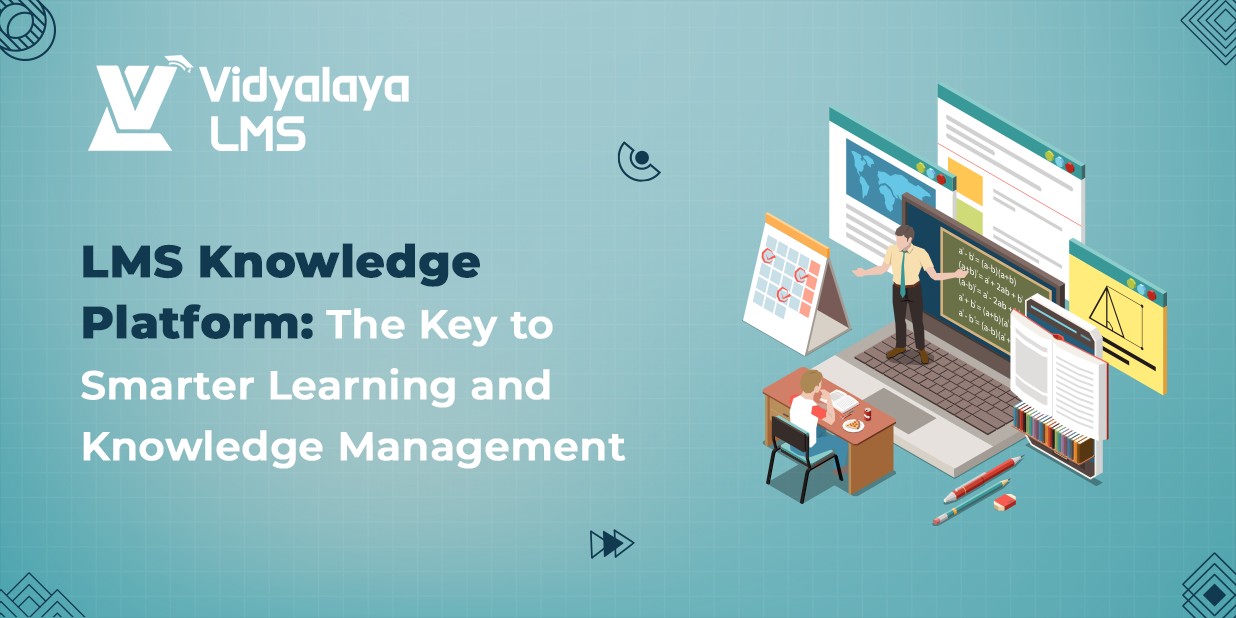
Consider the amount of knowledge generated by an educational institution daily – lesson plans, recorded classes, study materials, tests, training materials, notifications, and so on. Now, imagine wanting to find specific academic materials after months have passed since they were supposedly issued – however, they are dispersed in various emails, folders, communicating applications, and devices. This is where an LMS knowledge platform that integrates all the academic materials into one system comes into play.
A modern LMS is not just a platform for course uploads or online testing anymore. By strategically using information management technology at your LMS, you can create a powerful hub where your educational content as well as corporate knowledge is stored, used, and reused. As schools, universities, training services, and businesses move in the direction of digital education, merging the learning process with knowledge management becomes a must.
What Is an LMS Knowledge Platform?
An LMS knowledge platform is an online space that includes features for managing learning processes and for storing and sharing knowledge. Conventional Learning Management Systems emphasize the aspects of course development, lesson assignments, assessment administration, and tracking of student success. It can help institutions organize documents, videos, presentations, FAQs, lesson plans, training materials, policies, and other educational resources so that users can access relevant information when they need it.
To put things simply, it links education to information. In the case of a school, this could be made possible by allowing educators to use an available library of lesson resources and enabling learners to obtain education materials from one place. When it comes to organizations, the same idea can be applied to ensure training of personnel and preservation of vital organizational information.
Why LMS Knowledge Management Matters?
Educational knowledge is constantly being created. A teacher may develop an excellent lesson plan, prepare an assessment, record an instructional video, or create useful study material. Without a proper system, these resources can remain scattered across computers, email accounts, messaging applications, and physical files.
An LMS knowledge management system provides a structured way to bring these resources together.
Instead of asking, “Where is that file?” users can search for information within an organized digital environment. This saves time and makes useful knowledge available to a wider group of learners and educators.
Effective LMS knowledge management can help organizations:
- Organize learning resources in one centralized location
- Make educational content easier to search and access
- Encourage teachers and employees to share knowledge
- Reduce duplication of learning materials
- Support self-paced learning
- Track learner participation and progress
- Preserve valuable institutional knowledge
- Improve collaboration between educators, learners, and administrators
The Role of Cloud Based LMS Platforms
The move toward digital education has also increased interest in cloud based LMS platforms. Unlike systems that depend heavily on local servers and infrastructure, cloud-based solutions can be accessed through the internet from different devices and locations.
This flexibility is particularly useful for modern learning environments. Teachers can upload or update resources without depending on a particular computer, while students can access learning materials from home, school, or another location. Cloud based LMS platforms can also make it easier for organizations to scale their learning operations. As the number of users, courses, and resources increases, institutions can manage their digital learning environment without treating physical infrastructure as the centre of their learning strategy
The comparison of LMS Knowledge Management System and Traditional Learning Management
Typically, a standard LMS is designed to deliver and monitor learning. Consider a teacher who creates a detailed guide for teaching mathematics. In a basic learning environment, that guide may be shared with one class. In an effective LMS knowledge management platform, the same resource can potentially become part of a broader knowledge library, where other teachers and learners can discover and use it.
This creates a cycle:
Create → Organize → Share → Learn → Improve → Reuse
Over time, this cycle can turn an LMS from a course-delivery tool into a long-term knowledge resource.
Key Features of an LMS Knowledge Management Platform
A useful LMS knowledge management platform should make information easy to create, organize, find, and use. While features differ between platforms, several capabilities are particularly important.
| Feature | How It Supports Smarter Learning |
| Centralized content library | Keeps courses, documents, videos, and resources organized |
| Search and categorization | Helps users quickly find relevant knowledge |
| Course management | Supports structured learning programs and lessons |
| Assessments | Helps measure learner understanding and progress |
| Collaboration | Allows teachers and learners to exchange ideas and resources |
| Progress tracking | Gives educators and administrators visibility into learning activities |
| Cloud accessibility | Makes resources available across locations and devices |
| Reporting and analytics | Provides insights into participation and learning patterns |
The goal is not simply to have more features. The goal is to make knowledge easier to use.
How an LMS Knowledge Platform Supports Teachers?
Teachers are among the biggest contributors to an institution’s knowledge base. Every academic year, they create lesson plans, assignments, presentations, question papers, activities, and explanations. An LMS knowledge platform can provide teachers with a structured place to store and reuse these resources. They can update materials when needed instead of repeatedly creating the same content from scratch.
It can also encourage collaboration. One teacher’s resource may become another teacher’s starting point for creating a better lesson. This turns individual experience into shared institutional knowledge.
How Students Benefit
- Learners can be empowered working within an environment where learning resources are organized.
- Instead of depending only on the notes taken during classes, students can go back to the lessons and find additional material, finish their tests and learn at their pace if the platform allows it.
- A good knowledge management and learning system should cater to a range of learning styles. Some students like reading while others enjoy videos, interactive learning or practice tests.
- The important point is accessibility: relevant knowledge should be available when learners need it.
The Future of Learning and Knowledge Management
The future of digital learning is moving toward connected ecosystems rather than isolated tools. Learning content, institutional knowledge, communication, assessments, analytics, and collaboration are increasingly becoming part of the same digital environment.
This makes LMS knowledge management more than a technology trend. It represents a change in how organizations think about knowledge. Instead of treating learning materials as temporary course content, institutions can treat them as valuable resources that can be created, improved, shared, and reused over time.
An LMS knowledge management system can play an important role in this transition by connecting everyday learning with long-term knowledge creation.
Final Thoughts:
An LMS knowledge platform can help educational institutions move beyond simply delivering courses and assessments toward building a connected, reusable, and organized digital learning environment. By bringing learning resources, institutional knowledge, collaboration, assessments, and analytics together in one place, institutions can save time, improve accessibility, and make valuable knowledge available whenever it is needed. For schools, colleges, training organizations, and businesses, adopting a modern learning and knowledge management system can create a more efficient approach to managing both learning and institutional knowledge.
With Vidyalaya LMS, organizations can bring their learning resources and knowledge into a centralized digital environment designed to support smarter learning and better knowledge management. Whether you want to streamline academic content, empower educators, improve learner engagement, or build a scalable digital learning ecosystem, Vidyalaya LMS can help you take the next step toward a more connected learning experience. Contact us today for a free demo and discover how Vidyalaya LMS can support your institution’s learning and knowledge management needs.